Executive summary – what changed and why it matters
On November 26, 2025, Uber and China-based WeRide moved from supervised trials to a commercially available, Level 4 driverless robotaxi service on Yas Island in Abu Dhabi – the first fully driverless Uber‑partner rollout outside the U.S. and China. The deployment is significant because it replaces safety operators on public roads, leverages a federal UAE permit (October 2025) and an ITC Abu Dhabi operational license, and signals a path to breakeven by removing driver costs and scaling utilization across >100 robotaxis in the region.
Key takeaways
- Substantive change: Level 4, driverless commercial rides began Nov 26, 2025 on Yas Island after federal approval; this is the first such service outside the US/China.
- Economic impact: Removing onboard safety operators materially reduces operating cost per trip and is cited as central to reaching breakeven unit economics.
- Operational model: Uber handles rider matching (UberX/Comfort or a new “Autonomous” option); WeRide supplies AV tech; Tawasul handles fleet ops and maintenance.
- Regulatory context: UAE’s permissive, stepwise approvals enabled fast transition from supervised to driverless; many Western markets remain more restrictive.
- Risks: liability, mixed‑traffic edge cases, cybersecurity and data governance, and public acceptance remain unresolved in broader urban expansion.
Breaking down the deployment: tech, ops, and scale
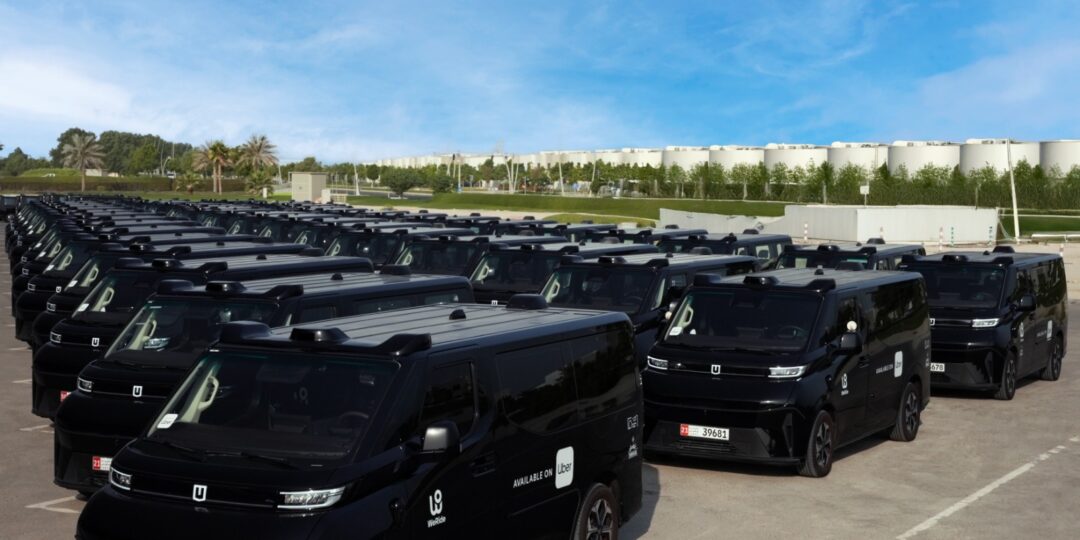
The vehicles in service are WeRide’s GXR robotaxis, certified for Level 4 operations within bounded geofenced areas. Documentation does not disclose detailed sensor suites or compute redundancy, but Level 4 classification implies local sensor/compute redundancy and operational design domain (ODD) limitations. Initial operations are intentionally constrained to Yas Island – a high‑traffic but geographically limited testbed — with plans to expand to core Abu Dhabi areas by end of 2025 and to other UAE cities thereafter.
Uber integrated the service into its app in three ways: random matching via UberX/Comfort, an “Autonomous” ride option to prioritize AV matches, and opt‑in Ride Preferences. Tawasul Transport runs logistics: cleaning, charging, depot management and inspections. Over 100 robotaxis are already operating in the Middle East, supporting a claim that the partners are near breakeven as driver costs disappear and utilization improves.
Why this matters now — market timing and strategy
WeRide and Uber’s timing leverages three forces: UAE regulatory openness to AV pilots, Uber’s multi‑vendor AV strategy (partnerships with ~20 AV companies), and pressure to prove commercial unit economics quickly. By moving driverless operations into a third international market (after Austin/Atlanta and Riyadh supervised launches), Uber signals it will push to have AVs on its network in at least 10 cities by end of 2026.
Competitive context: how this compares
Compared with Waymo in the U.S., which has emphasized long-term safety validation and slow city expansions, Uber’s multi-partner approach prioritizes geographic scale and commercial integration on its app. Chinese AV firms (WeRide, Pony.ai) are using permissive Gulf and European testbeds to accelerate real rides where U.S. market access is constrained. The differentiator for WeRide/Uber is integrated rider demand via Uber’s app and a local fleet operator (Tawasul), but competitors retain advantages in data depth, mapped geofences, or insurance arrangements.
Risks and governance considerations
Key risks include liability allocation if a driverless AV is involved in an incident (technology vendor vs. fleet operator vs. platform), inadequate public transparency on safety metrics, cybersecurity vulnerabilities in OTA updates and fleet management, and data residency/privacy for sensor and rider data. Regulatory permissiveness reduces entry friction but can also accelerate exposure to rare edge‑case failures when expanding into denser urban cores.
Operator and buyer implications — when to pilot, when to wait
If you run city transport, rideshare or fleet operations, this announcement makes clear that: 1) driverless AVs can be commercially operated in permissive jurisdictions today; 2) achieving breakeven hinges on high utilization and low maintenance/charging bottlenecks; and 3) regulatory engagement and insurance design must be prioritized before scaling into mixed urban traffic.
Recommendations — four concrete next steps
- For city/regulators: publish clear incident reporting, safety KPIs, and data‑sharing requirements before broad expansion; require independent audits of safety metrics.
- For transport/fleet ops: pilot AVs in geofenced, high-utilization corridors first; model unit economics with and without safety operators to validate breakeven timelines.
- For insurers and legal teams: renegotiate coverage and liability frameworks now — technology vendors, fleet operators, and platforms must have clear contractual indemnities.
- For enterprise buyers (mobility, logistics): evaluate multi-vendor strategies; insist on transparency for sensor, mapping, and cybersecurity practices before procurement.
Bottom line: Uber and WeRide’s Abu Dhabi driverless launch is a clear commercial step forward that validates a playbook — permissive regulation + app integration + outsourced fleet ops — for scaling robotaxis. It narrows the technical question to economic and governance ones: can operators sustain safe, profitable driverless fleets across more complex city geographies before a high‑profile incident forces regulatory retrenchment? Executive teams should treat this launch as a signal to accelerate regulatory, insurance and ops preparations, not as proof that broad urban driverless mobility is solved.
Leave a Reply