What changed – and why it matters
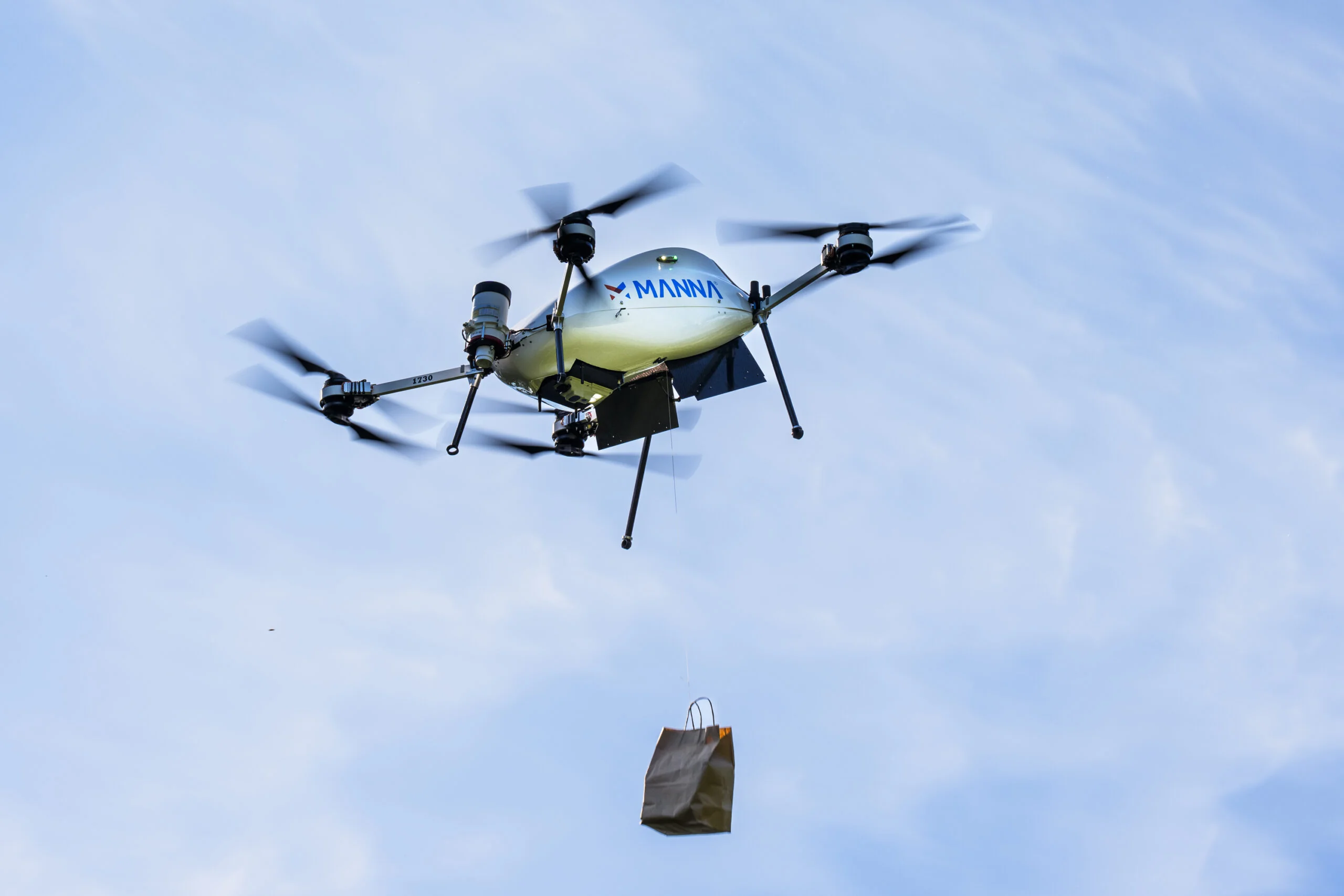
Manna, Wolt and Finnish cloud‑kitchen Huuva have moved from pilot to operational drone food deliveries in Espoo, Finland. The substantive change: live, regulated, LiDAR‑guided BVLOS (beyond‑visual‑line‑of‑sight) flights are now a routine delivery option for consumer orders, with Mission Control in Ireland managing flights and human confirmation before each drop.
This matters because it transitions drone delivery from isolated demos into an integrated last‑mile channel that can materially reduce per‑delivery cost and delivery time for suburban locations – provided weather, payload limits and regulatory rules align.
Key takeaways
- Drones are operational, not just a pilot: Manna has flown >50,000 deliveries in Dublin and now runs double‑digit daily drops in Espoo.
- Cost delta looks large on paper: Huuva estimates €5-6 for conventional deliveries vs ~€1 for drone drops (excludes Manna’s setup cost).
- Payload and weather are hard limits: each drone carries ~4.4 lb (~2 kg); icing forces fallbacks to couriers.
- Human oversight and redundancy: LiDAR maps, Mission Control approvals, landing‑site image checks, battery swaps and parachutes are standard safeguards.
- Integration matters: drones sit alongside e‑scooters, sidewalk robots and traditional couriers – orchestration and fallbacks are operational necessities.
Breaking down the operational model
Flights originate from a local launchpad shared with Wolt Market. Kitchen staff transfer orders to ground operators, who weigh and balance packages and place them in regulator‑approved bags. Mission Control in Ireland reviews LiDAR maps and planned itineraries, then drops a pin for a delivery within a short radius. If the operator approves, the drone captures a landing‑spot image for final confirmation and lowers the package on a biodegradable rope. If conditions are not met, the order is routed to a human courier.
Hardware and limits: each Manna drone carries ~4.4 lb and Manna can launch two drones concurrently. Batteries are routinely swapped to ensure full charge; redundancy exists at multiple levels and a parachute serves as last resort. Icing remains the main adversary; chemical de‑icing is off the table for food deliveries, so fallbacks are required in such conditions.

Quantified impact and caveats
Huuva’s headline numbers are striking: a theoretical reduction from €5-6 to ~€1 per delivery. That’s a >80% variable cost cut if accurate. Caveats: this excludes Manna’s capital and operational overhead to deploy in Finland (launchpad lease, local staff, regulatory compliance), and it assumes volumes high enough to amortize fixed costs. Current throughput is “double‑digit” deliveries/day — far from scale required to confirm the unit‑cost claim.
Latency and freshness improvements are genuine for short suburban hops: drones bypass traffic and can reduce delivery time for time‑sensitive items. But payload limits (2 kg) constrain menu selection and basket size, and adverse weather windows will create variability in service levels and customer experience.
Competitive and regulatory context
Wolt (owned by DoorDash) already runs sidewalk robots (Coco, Starship) and DoorDash has its own Dot robots; Alphabet’s Wing is also active in drone delivery. Manna’s approach — LiDAR, Irish Mission Control, human image confirmation — emphasizes centralized oversight and regulatory compliance. Compared with sidewalk robots, drones trade better speed and range for weather sensitivity and payload constraints. Against Wing/Dot, Manna is positioned as a partner to platform players rather than a vertically integrated marketplace owner.
Governance, safety and compliance flags
Operational risks to monitor: cross‑border telemetry and image transfers (Mission Control in Ireland) raise data jurisdiction and GDPR considerations; insurance and liability for third‑party damage remain complex; regulators will scrutinize incident readiness and fallback reliability. Human‑in‑the‑loop checks reduce risk but also add operational latency and staffing costs.
Recommendations for operators and buyers
- Run focused pilots in suburban corridors with predictable demand; model full TCO including capex, local setup and seasonal downtime.
- Negotiate service‑level and data ownership clauses with drone partners — demand audit rights for logs, images and incident reports.
- Design customer experience fallbacks and messaging for weather and icing; automate reroutes to couriers to avoid order failure.
- Validate insurance coverage for third‑party injury/damage and confirm regulatory approvals for winter operations before scaling.
Bottom line: Manna, Wolt and Huuva have demonstrated an operational, regulatory‑approved drone delivery channel that can radically lower per‑drop marginal costs and speed up suburban deliveries. The real test will be scaling throughput through winter weather, proving the advertised unit economics at scale, and embedding robust governance for cross‑border operations and public safety.
Leave a Reply