THE CLAIM
Software engineers are the canary in the AI coal mine, and the warning is not just about job loss. Their field shows, in real time, how AI does something more structural: it strips routine execution from humans and then starts to pry technical judgment away from the people who built the systems.
Across the software stack, AI now rivals or surpasses human engineers on the tasks that used to define junior and mid-level roles. Agentic tools plan features, write code, refactor systems, and generate tests at industrial scale. The remaining human advantage is contextual technical judgment-the ability to weigh tradeoffs, risks, ethics, and business constraints. But even that “crown jewel” is being pulled out of engineers’ hands and embedded into prompts, no-code tools, evaluation suites, and product workflows controlled by others.
Software engineering is simply the first domain where this transformation is visible end-to-end. The same pattern-automate boilerplate, automate integration, externalize and centralize judgment-will spread to other high-skill professions. The future of white-collar work is not “AI as a helpful assistant.” It is AI as the default executor, with human judgment gatekept by whoever owns the agents, the data, and the CI pipeline.
THE EVIDENCE
The trajectory is clearest at the bottom of the ladder. Tools like GitHub Copilot, Amazon CodeWhisperer, Cursor, and Replit’s AI features began as glorified autocomplete in 2021-2023, filling in boilerplate and writing unit tests. By mid-decade, they had become competent junior engineers in all but name.
Stanford’s Digital Economy Lab estimates a 20% employment drop for 22-25-year-old developers between late 2022 and July 2025, correlating with the rapid rollout of capable coding models. The reason is not subtle: employers report that AI now handles 70-80% of classic entry-level work—CRUD APIs, UI scaffolding, straightforward test suites. A 2025 Stack Overflow survey found that around 80% of entry-level tasks are repetitive enough for direct automation. Amazon CodeWhisperer’s internal evaluations show AI-generated unit tests passing at rates roughly 40% higher than those written by junior hires, and without the syntax churn that used to justify “learning on the job.”
Mid-level work is following the same curve. Open-source tools like Aider, launched in 2023, operate directly on a codebase via CLI and have been benchmarked at autonomously resolving about 65% of GitHub issues they are pointed at. Commercial agents such as Cognition Labs’ Devin, and builder-focused products like Builder.io’s Visual Copilot, now span planning, implementation, refactoring, and live DOM editing. Teams report 5–10x cycle-time reductions on integration and refactor tasks when one human engineer coordinates a handful of agents instead of writing every line themselves.
At the top of the stack, frontier models are not stopping at syntax either. Claude 3.5 Sonnet, GPT‑4o, and Google’s Gemini 2.0 willingly propose complete architectures: microservices layouts, data models, caching strategies, observability plans. With 100K–1M token context windows, they ingest entire repositories and RFC documents, then emit design diagrams and migration plans that would have taken a human tech lead days. In many organizations, those AI drafts are now the first version of the design, not the last.
Yet these systems routinely miss context: compliance edge cases, organizational politics, legacy constraints that live in humans’ heads. That is where technical judgment still matters. But instead of leaving that judgment distributed among engineers, companies are starting to encode it in systems. Teams introduce explicit “judgment gates” in CI: LLM-based reviewers that score pull requests for performance budgets, security posture, or UX guidelines; contract tests that enforce architectural boundaries; policy engines that block entire classes of changes. Human leads configure the gates once, then the AI enforces them at scale.

At the same time, product managers and designers are learning to bypass engineering for early-stage builds. Vercel’s v0.dev turns text descriptions into production-ready React components and layouts. Replit Agent assembles backends and small applications from natural-language prompts in the browser. A PM who owns the spec and these tools now owns the first working version of the product. Engineers increasingly arrive later, as reviewers and orchestrators of AI-generated artifacts, not as originators.
The productivity headline is real. Case studies compiled by ER Consulting in 2026 describe teams achieving up to 10x throughput once they standardize on agent orchestration and LLM-assisted development. But the cost is equally real. AI-produced code, when shipped without human guardrails, shows roughly double the defect density of human-written code. Reviewers face an unending stream of machine output to triage, leading to a reported 30% rise in reviewer burnout on heavy AI teams. In other words: execution is wildly cheaper, but high-quality judgment is scarcer, more centralized, and more exhausted.
THE STRONGEST OBJECTION
The sharpest counterargument is that software engineering is a special case and a poor template for the rest of the economy.
Code is unusually amenable to automation: it is fully digital, rigorously specified, and immediately testable. A pull request either compiles or it doesn’t; a benchmark either passes or fails. The internet is flooded with open-source repositories that give models near-perfect training data. Under these conditions, it would be surprising if AI didn’t devour repetitive coding work. Other professions—management, healthcare, education, law—operate in fuzzier spaces with messy human preferences, incomplete feedback, and far less clean data. They may never offer the same leverage to AI systems.
Even inside software, the objection continues, the “judgment crisis” is overstated. Senior engineers still arbitrate tradeoffs that no model can fully capture: how much downtime a migration can risk in a regulated industry, when to accept technical debt to hit a market window, which edge cases matter ethically even if they are statistically rare. AI hallucinations, security blind spots, and architectural overconfidence all reinforce the value of seasoned humans. The evidence that AI-generated code has higher defect density, and that teams are burning out on review, can be read as proof that automation will plateau without deep human involvement, not that judgment is being displaced.

Historically, automation waves in engineering have increased demand for experts rather than erasing them. High-level languages, compilers, cloud platforms, and CI/CD all “automated away” low-level work, yet the number of developers grew because software ate more of the world. Under this view, LLMs and agents are simply the next abstraction layer: they may thin out some junior roles but will create new categories—prompt engineers, AI reliability specialists, full-stack AI engineers—without fundamentally shifting who owns judgment.
WHY THE CLAIM HOLDS
The objection is right about one narrow point: software is unusually tractable to AI. That is precisely why it functions as a canary. If AI cannot rewire software work, it cannot plausibly restructure other white-collar domains. But AI has rewired software work, and the pattern of that rewiring matters more than the particulars of code.
First, the ladder is being carved out from below. When 70–80% of entry-level tasks are automated and employers openly prefer tools over new graduates for boilerplate work, the classic apprenticeship model collapses. The route from “no experience” to “trusted judgment” shrinks. That is not unique to engineering; any profession where juniors historically learned by grinding through repetitive tasks is exposed. Software shows that AI will happily eat that layer as soon as data and feedback are available.
Second, the mid-level is being redefined around orchestration rather than execution. Aider resolving the majority of targeted GitHub issues, Devin-style agents refactoring monoliths, and visual tools collapsing design-to-code loops all point in the same direction: one human now coordinates many machine workers. The scarce skill is not writing the code but breaking problems down, sequencing agents, and interpreting their output. That “task decomposition” ability is a form of technical judgment—and it is portable. Finance, operations, marketing, and even parts of medicine will see similar workflows: a human defines objectives and constraints; a fleet of models executes.
Third, and most importantly, judgment is being externalized into systems. CI-integrated evaluations, LLM-based code reviewers, and policy engines are not just productivity hacks; they are mechanisms for turning tacit judgment into explicit, enforceable rules. Once encoded, those rules no longer belong to individual engineers. They belong to whoever controls the repository, the model configuration, and the deployment pipeline—often product leadership or platform teams. No-code tools and agents in the hands of PMs only accelerate that shift. The authority to say “this is good enough to ship” migrates toward the center of the organization and into the configuration of AI systems themselves.
Finally, the defect and burnout data do not refute the claim; they sharpen it. Doubling defect density in AI-generated code while achieving 10x throughput does not restore distributed human judgment. It concentrates responsibility in a smaller group of overtaxed reviewers and leads. That is exactly what a world of pervasive AI executors looks like: a long tail of automated work, overseen by a thin stratum of humans whose decisions are mediated by dashboards, metrics, and judgment gates rather than direct contact with the work itself.
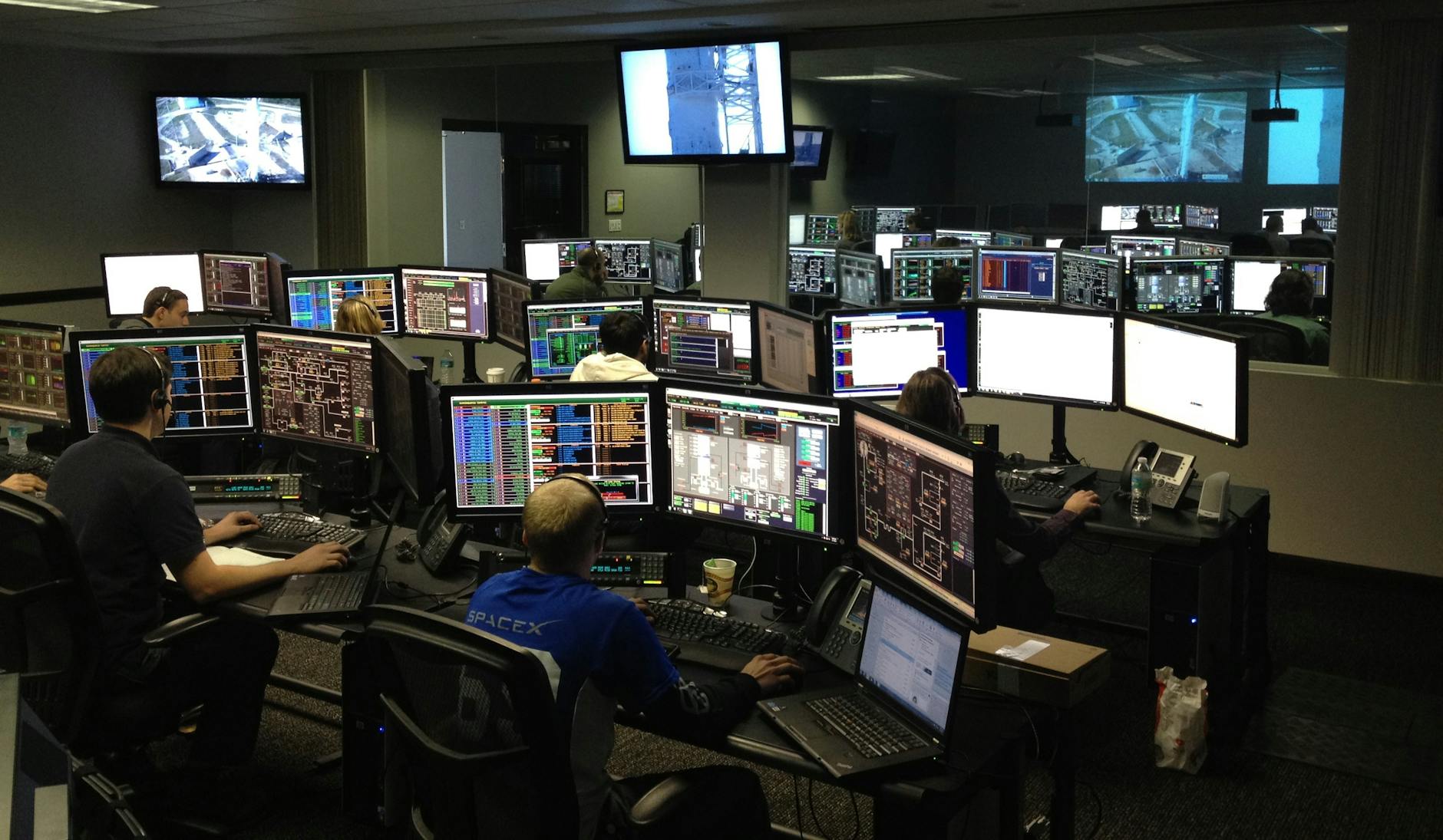
Software engineers are already living in that world. Their experience is not an anomaly; it is an early look at how AI rearranges power and responsibility in any system where outputs can be digitized, evaluated, and optimized.
THE IMPLICATION
If software engineers are the canary, the message for the broader economy is blunt: AI will not simply “augment” professionals; it will restructure who gets to exercise judgment at all.
In domain after domain, routine analytical and compositional work will be handed to agents that look more like Devin and Aider than like chatbots. The people who define prompts, guardrails, and evaluation metrics will effectively own the profession’s collective judgment. Everyone else will live downstream of those choices, supervising or troubleshooting machine output rather than practicing the craft in its original form.
For organizations, the leverage is enormous but so are the stakes. Teams that build robust judgment gates—CI-integrated evaluations, domain-specific test harnesses, and explicit human-in-the-loop reviews—can capture large productivity gains while containing defect risk. Teams that treat AI as a free intern will drown in subtle failures and reviewer burnout. For labor markets, the squeeze at the entry level will make it harder for new cohorts to acquire the experience needed to join the shrinking circle of decision-makers.
Software engineering is simply revealing the shape of this future first. The coal mine is filling with gas. The engineers are already coughing.
Leave a Reply