“Energy is king.” If your AI strategy doesn’t start there, it’s built on wishful thinking. Financial Times and MIT Technology Review are right: the winners in AI won’t just have better models-they’ll have better electricity. China’s 2024 renewables surge gives it a scale advantage. The US, facing grid bottlenecks and slow permitting, risks paying more and moving slower. The business implication is blunt: without an energy plan, your AI roadmap is a cost and reputational risk plan.
Executive Hook: Your AI P&L Now Lives on the Grid
Data centers already consume about 4% of US electricity and are projected to more than double to 426 TWh by 2030. Hyperscale AI campuses can draw as much power as 100,000 households. Meanwhile, the US slipped from 10th to 11th among major economies on energy efficiency. That’s not a trivia slide; it’s a margin call on AI ambitions.
Short-term fixes-demand flexibility and utility agreements tapping backup generation-can buy time. But long-term AI competitiveness will be decided by who can secure abundant, affordable, and increasingly clean power faster than rivals. Without addressing energy efficiency and grid readiness, AI initiatives risk escalating costs, regulatory backlash, and reputational damage.
Industry Context: The Geography of AI Is Becoming the Geography of Electricity
China added an estimated 429 GW of new power capacity in 2024, led by solar, wind, nuclear, and gas. That scale enables rapid data-center expansion near generation and transmission upgrades. The US story is more fragmented: interconnection queues stretch years; regional grids are stressed (California and Texas); and permitting for lines and plants lags demand.
-
California (CAISO): Abundant midday solar, evening peaks, and local transmission constraints. Data-center power can be available in one county and impossible in the next. Flex-load programs are valuable but not sufficient for multi‑hundred‑MW AI campuses.
-
Texas (ERCOT): Fast interconnection relative to other regions and strong wind/solar growth, but high weather volatility and price spikes. Load growth from AI (plus crypto and industrials) is testing reliability and driving curtailment risk without firming resources.
This uneven energy map means your AI footprint strategy is now a power market strategy. Site selection, procurement, and grid partnerships will separate AI leaders from followers.
Core Insight: Treat Energy as a First-Class Product Requirement
I’ve sat in too many “AI steering” meetings where energy shows up as a line item, not a design constraint. That’s backwards. The teams scaling reliably and affordably do three things differently:
-
They quantify AI workloads in energy terms (kWh per training run, per million tokens, per inference SLA), not just GPU-hours.
-
They co-develop siting and architecture with energy procurement, grid services, and thermal design—before committing to model scale or vendor contracts.
-
They secure “optionality” across regions, utilities, and resources so AI growth doesn’t stall when one node hits a substation or permitting wall.
In short: the AI advantage will belong to companies that plan supply (electricity) and demand (compute) as a single system.
Common Misconceptions That Derail AI Energy Strategy
-
“Efficiency will save us.” Efficiency gains are real, but aggregate demand is rising faster. Counting on chip roadmaps alone is not a strategy.
-
“We’ll buy green credits later.” Annual offsets won’t unblock a congested substation or satisfy emerging hourly matching and local-impact rules.

-
“PUE tells the whole story.” For AI, conventional PUE hides density and cooling penalties. You need AI-adjusted PUE and energy-per-task metrics.
-
“The utility will handle it.” Utilities move on regulatory timelines. Without load-flex commitments or firming resources, your project may queue for years.
-
“We can centralize everything in one state.” Regional political, water, and transmission risks argue for a portfolio of sites, not a monoculture.
A Strategic Framework for AI Energy Advantage
Use this phased playbook to align AI growth with power reality. Timelines are cumulative; some tracks run in parallel.
Phase 1 — Assessment (3-6 months)
-
Workload energy baselining: Measure kWh per training epoch, per 1M tokens generated, per inference at target latency; define model-shape scenarios (size, context, precision) and their energy curves.
-
Facility diagnostics: Current PUE, water usage effectiveness (WUE), and thermal limits at expected rack densities (30-80 kW/rack).
-
Grid readiness scan: Substation capacity, interconnection queue position, curtailment history, tariff exposure (on-peak, demand charges).
-
Indicative cost: $200k-$500k for metering, audits, and modeling across 1–3 sites.
Phase 2 — Infrastructure & Siting (6–18 months)
-
Thermal architecture: Liquid cooling readiness, heat-reuse pathways (district heating, process use), and redundancy plan; target AI-adjusted PUE ≤ 1.20 at design density.
-
Site portfolio: Diversify across CAISO, ERCOT, and at least one MISO/PJM/SE region to hedge policy and weather risk.
-
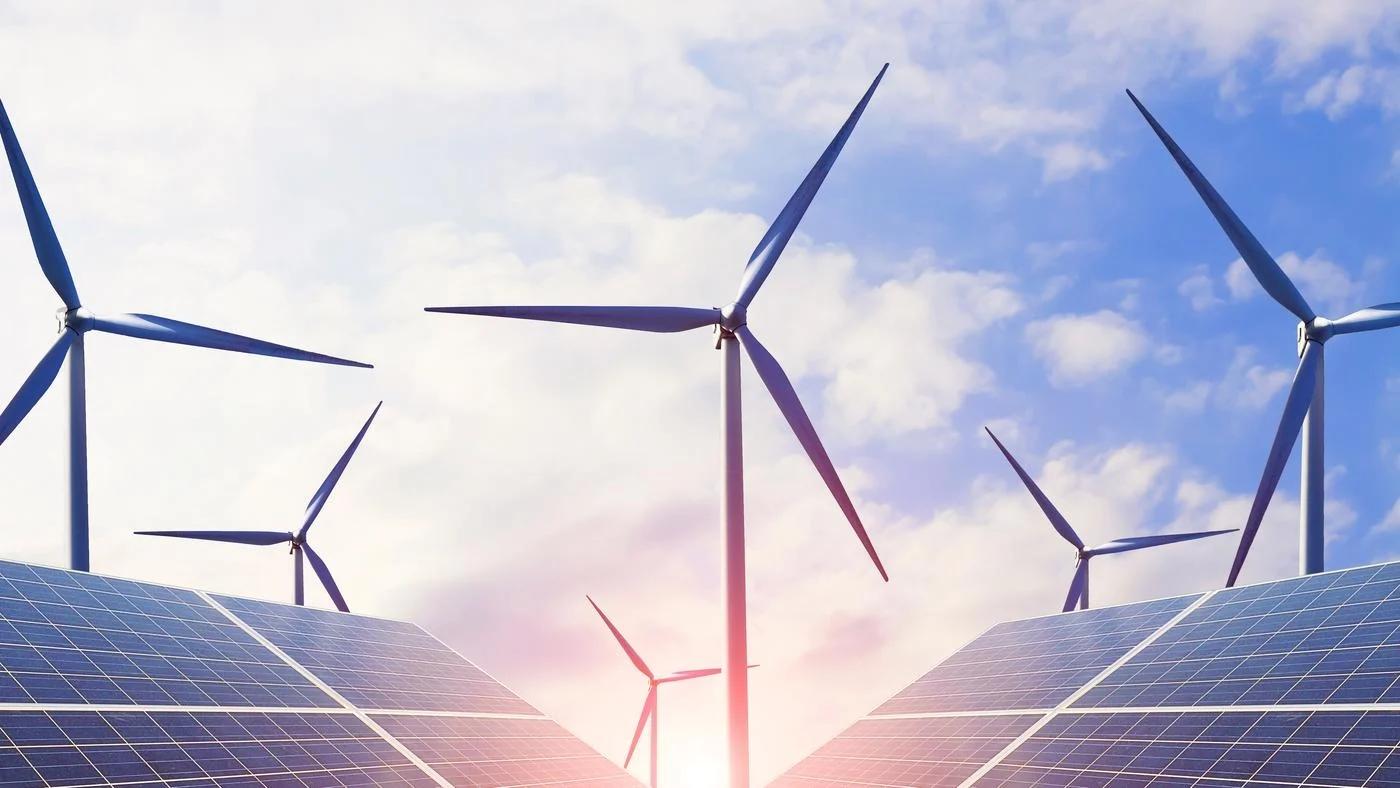
On-site/near-site resources: 10–50 MW behind-the-meter solar + 50–200 MWh storage or thermal storage to shave peaks and provide grid services.
-
Indicative cost: $15M–$60M for 20–50 MW substation upgrades; $5M–$20M for on-site renewables and storage pilots.
Phase 3 — Energy Procurement & Grid Strategy (12–36 months)
-
Structured PPAs/VPPAs: 10–15 year contracts (50–500 MW) with hourly matching and deliverability to your balancing area; add storage or firming (hydro, geothermal, low-carbon thermal) to de-risk peaks.
-
Utility agreements: Curtailment commitments (e.g., 0.25% of hours yields substantial headroom) and dispatch rights for backup generation compliant with local emissions rules.
-
Capacity and congestion hedges: Financial transmission rights, tolling, or capacity contracts in constrained zones to stabilize landed $/MWh.
-
Indicative cost: $30–$65/MWh for contracted renewables depending on region; add $10–$25/MWh for firming/storage.
Phase 4 — Governance & Transparency (3–9 months, then ongoing)
-
AI Energy KPIs: Report quarterly—kWh per AI task, AI-adjusted PUE, percent renewable (hourly matched), carbon intensity (gCO₂e/kWh), water intensity (L/kWh), and curtailment hours delivered.
-
Vendor transparency: Require model and data-center energy disclosures; align incentives with contractual penalties/bonuses.
-
Board oversight: Risk committee reviews of grid exposure, regulatory developments, and community impact (noise, water, land use).
What Implementation Looks Like: Two Fast Stories
Texas manufacturer with AI vision: Faced a 24‑month interconnection delay, they split workloads across ERCOT and a Midwestern site, signed a 12‑year solar+storage VPPA, and committed to 30 curtailment hours/year. Result: landed energy costs dropped 18%, and they cleared internal approval to scale inference 3x without reliability penalties.
California retailer piloting AI personalization: Constrained by local capacity, they installed 8 MW/32 MWh behind‑the‑meter storage, shifted nightly training windows to soak up off‑peak power, and negotiated a tariff with demand charge relief for grid services. Result: model training SLAs held, and energy volatility was cut in half.
What Most Companies Get Wrong
-
Conflating annual renewable procurement with hourly availability—leads to surprise peak charges and public scrutiny.
-
Ignoring water: AI cooling strategies that don’t include WUE targets can trigger community opposition and permit delays.
-
Single-vendor dependence: Locking into one cloud region or DC operator without energy transparency exposes cost and outage risk.
Vendor and Data-Center Transparency Checklist
-
Model “energy card”: kWh per 1M tokens, per training step; test conditions (batch size, precision, context window), and hardware profile.
-
AI-adjusted PUE at design density, WUE, and annual heat-reuse percentage.
-
Hourly renewable matching percentage and grid region carbon intensity (gCO₂e/kWh).
-
Curtailment capability: Minimum notice, ramp rates, and annual hours committed.
-
Water source and drought contingency plan; local community engagement commitments.
-
Interconnection status: Substation capacity, queue position, and transmission constraints.
Monday Morning: Six Actions to De-Risk AI Growth
-
Appoint a single accountable owner for “AI Energy” spanning CIO, CTO, and Sustainability, with quarterly KPIs.
-
Start metering: instrument training and inference clusters to publish kWh per task and AI-adjusted PUE within 60 days.
-
Open utility talks in your top two regions for curtailment MOUs and tariff optimization; target 0.25% curtailment hours as a starting point.
-
Issue an RFP for 10–15 year PPAs with storage and hourly matching; insist on deliverability to your balancing areas.
-
Pilot a 5–10 MW behind-the-meter storage project to manage peaks and participate in grid services markets.
-
Adopt a siting portfolio approach: at least one ERCOT site for speed, one CAISO/PJM/MISO site for diversification, with water and community impact screens.
The Bottom Line
AI scale is no longer primarily a compute problem—it’s an energy system problem. The FT/MIT Technology Review debate is a wake-up call: China’s rapid buildout shows what energy abundance can unlock; the US must close the gap with smarter procurement, faster grid investment, and real transparency. Companies that institutionalize energy as a first-class product requirement will ship more AI, at lower cost, with fewer headlines to defend. The rest will wait in interconnection queues while their competitors lap them.
Leave a Reply