Executive summary: Search is becoming a travel agent
Google is expanding three AI travel capabilities in Search: Flight Deals is now live in 200+ countries and 60+ languages; Canvas in AI Mode can build multi‑session trip plans using real‑time flights, hotels, and Maps data; and agentic booking for restaurants, tickets, and appointments is rolling out to all U.S. users, with direct flight and hotel bookings “planned later.” For operators, this shifts high‑intent travel discovery and conversion from websites and apps into Google’s AI surfaces-compressing the funnel and potentially disintermediating online travel agencies (OTAs) and metasearch.
Key takeaways
- Demand capture moves up the stack: AI Mode can plan, compare, and increasingly transact inside Search, reducing click‑outs to OTAs and supplier sites.
- Global reach, local nuance: Flight Deals expands to 200+ countries and 60+ languages, positioning Google as a bargain discovery layer worldwide.
- Agentic flows are arriving: U.S. users can now complete restaurant/ticket/appointments via AI Mode; flights/hotels booking is next, tightening the loop from intent to purchase.
- Measurement risk: AI surfaces obscure traditional attribution, threatening SEM/SEO planning and last‑click models.
- Regulatory watch: Expanded vertical integration heightens antitrust and self‑preferencing scrutiny, especially under the EU’s DMA.
Breaking down the announcement
Flight Deals: Initially piloted in the U.S., Canada, and India, Google’s AI‑powered Flight Deals is now global. Users describe where, when, and how they want to travel; AI surfaces “best bargains” across destinations inside Google Flights. The practical outcome: less exploratory clicking to metasearch or OTAs when the shopper’s goal is value, not a specific route.
Canvas in AI Mode: Canvas, a side‑panel workspace in Search’s AI Mode, now builds travel plans on desktop (U.S., Labs users). It assembles real‑time data from Google Flights and Hotels and layers in Maps photos, reviews, and travel‑time‑aware suggestions for restaurants and activities. The key is continuity: plans persist across sessions, and users can negotiate trade‑offs (e.g., hotel near brunch vs. hiking). This isn’t just summarization; it’s an interactive trip configurator that retains context.
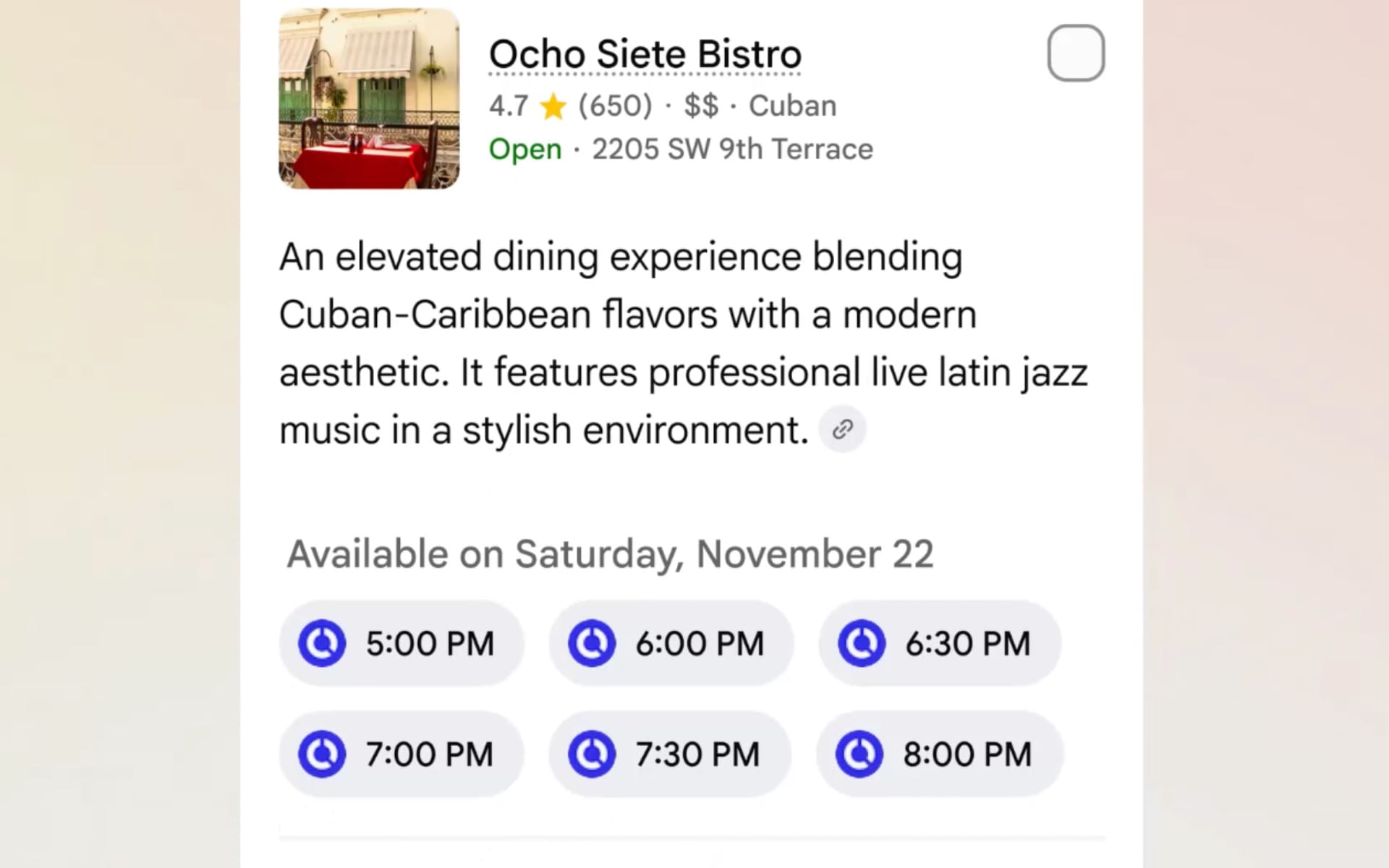
Agentic booking: Google is expanding AI‑assisted reservations for dining, events, and beauty/wellness to all U.S. users. The assistant searches across reservation platforms to present real‑time availability and completes the booking steps. Google says flights and hotels will be bookable directly within AI Mode later, enabling end‑to‑end trip completion without leaving Search.
What this changes for operators
Conversion shifts inside Search. As AI Mode plans and books, the “open web” portions of the funnel shrink. Expect lower organic and paid click‑through to OTAs and supplier sites for value‑seeking and flexible‑date queries. If Google introduces sponsored placement inside AI trip plans (likely), performance budgets will reallocate from traditional text ads to AI surfaces.
Trip planning standardizes. Canvas could normalize how travelers compare hotels (amenities, price, travel time) and activities, favoring suppliers with well‑structured data, accurate rates, and rich Maps content. Feed quality becomes a competitive edge.
Attribution blurs. AI‑mediated flows reduce visibility into which channel drove the booking. Standard last‑click and view‑through models will undercount upper‑funnel influence and inflate the value of AI placements operators can’t yet fully audit.
Competitive angle
Expedia, Booking Holdings, Kayak, and Hopper already offer AI trip planners that optimize inventory within their ecosystems. Microsoft Copilot supports restaurant bookings via partners. The difference here is distribution: Google’s assistant lives at the default entry point for travel search. If Google succeeds at in‑Search booking for flights and hotels, OTAs face margin pressure from fewer referral opportunities and potentially higher auction costs for prominent AI placements.

Suppliers (airlines, hotel chains) may welcome a reduced dependency on OTA commissions if Google channels direct bookings. But that upside depends on how Google ranks and labels results, the cost of paid inclusion (if any), and whether rate parity or loyalty benefits are preserved inside AI flows.
Risks, governance, and unknowns
- Regulatory exposure: Expanding vertical travel features inside Search intensifies self‑preferencing questions under the EU DMA and ongoing antitrust scrutiny in multiple jurisdictions.
- Disclosure and ads: It’s unclear how sponsored options will be labeled or ranked within AI plans and agentic results. Lack of clarity raises compliance and consumer trust issues.
- Data and liability: Agentic booking requires handling sensitive user data and executing transactions. Misbookings, cancellations, and refund disputes need clear responsibility, audit trails, and recovery flows.
- Quality variance: AI‑generated itineraries can overfit to generic preferences, miss local constraints (seasonality, closures), or hallucinate availability. Human‑in‑the‑loop review remains prudent for complex trips.
- Coverage gaps: Canvas is U.S. desktop and Labs‑only for now; global parity and mobile UX are pending. Flights/hotels booking timelines are unspecified.
Operator’s playbook: What to do next
- Optimize for AI surfaces: Ensure complete, up‑to‑date feeds for Google Flights/Hotels; enrich Maps profiles with high‑quality photos, reviews response, and structured attributes. Fix rate and availability discrepancies.
- Rebalance media tests: Carve 10-20% of SEM budget to experiment with AI Mode placements as they become available; track assisted conversions and brand lift, not just last‑click ROAS.
- Instrument attribution: Stand up server‑side event tracking, coupon/offer keys, and holdout tests to estimate AI Mode’s incremental impact. Expect less referrer transparency.
- Harden transaction ops: Define SLA, remediation, and refund policies for AI‑initiated bookings. Implement audit logs and consent capture for agentic actions.
- Plan for policy change: If you operate in the EU/UK, prepare for shifting ranking/labeling rules under the DMA/competition remedies that could alter AI surfacing and ad formats.
Bottom line: Google is consolidating trip discovery, planning, and soon booking inside Search. For travel brands, the opportunity is incremental demand at the precise moment of intent-if your data is clean and your distribution strategy adapts. For intermediaries, the moat is narrowing; differentiate on loyalty, service, and unique inventory before AI Mode makes the default path a Google‑owned one.
Leave a Reply