Executive Summary
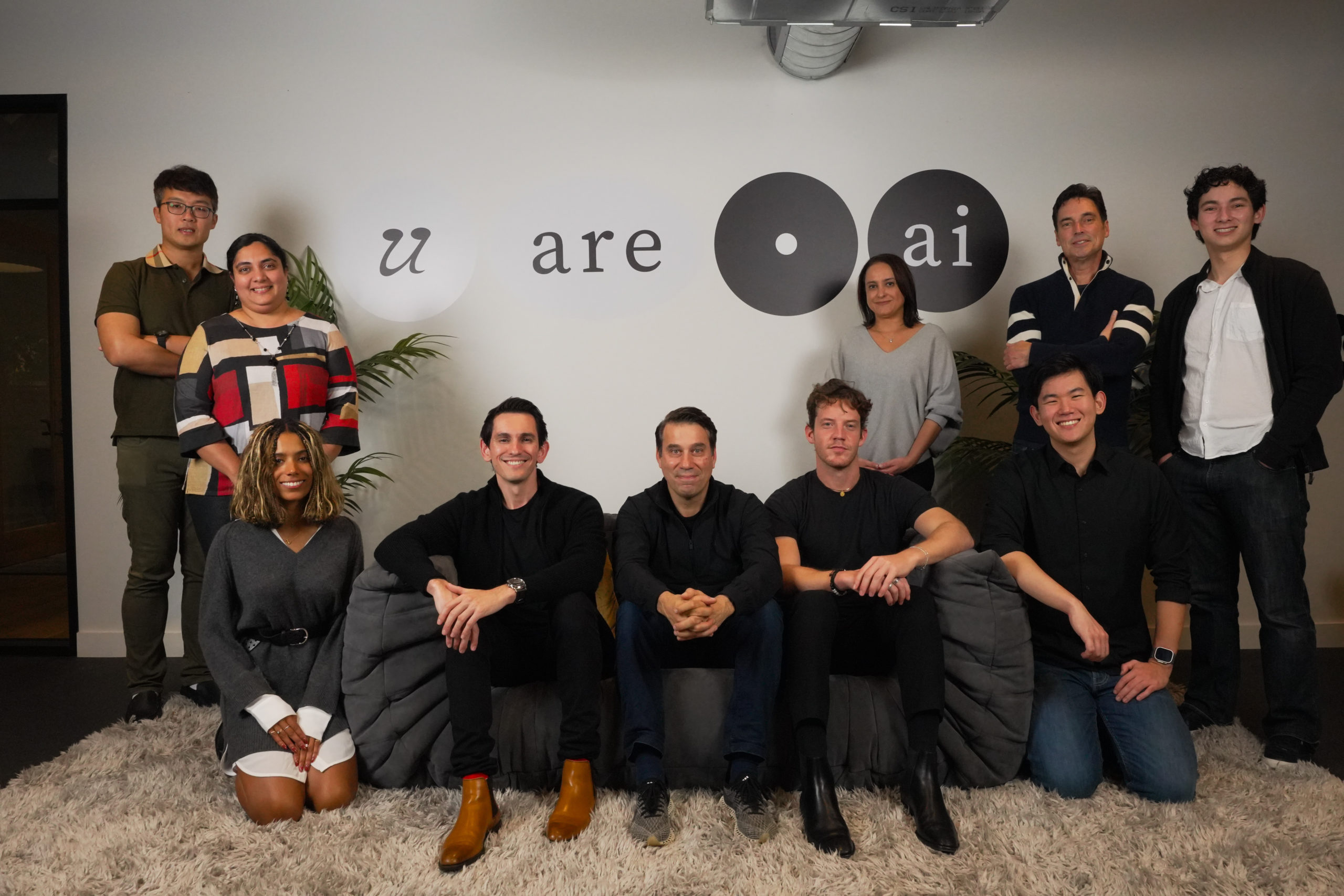
Uare.ai (formerly Eternos) raised a $10.3M seed round led by Mayfield and Boldstart and is pivoting from memorial AIs to professional-grade personal AIs built on its Human Life Model (HLM). The company’s pitch: train an individual-specific model from your life story, voice, and facts; you own it; and you can put it to work generating content, handling customer interactions, or executing defined projects.
This matters because it reframes “digital twins” from novelty to labor. If Uare.ai’s “I only answer from your data” stance holds, it could reduce hallucination risk for client-facing use-at the cost of coverage and constant maintenance. Launch is planned later this year; pricing will be subscription and/or revenue share.
Key Takeaways
- What changed: Rebrand to Uare.ai, $10.3M seed, and a pivot from legacy memorials to creator and professional tools built on person-specific models.
- Claimed differentiation: No fallback to general LLMs; models answer strictly from your life data and provided facts, saying “I don’t know” otherwise.
- Impact: Potentially safer for regulated or high-trust work (e.g., CPAs, consultants), but narrower scope means active curation and updates are required.
- Business model: Subscription or revenue share from digital-twin earnings; details not disclosed.
- Risks: Data governance, right-of-publicity, consent for voice likeness, disclosure rules for synthetic agents, and vendor lock-in.
Breaking Down the Announcement
Founder Robert LoCascio, who previously led LivePerson for nearly three decades, launched Eternos in 2024 to capture life stories for loved ones. The first widely covered client, Michael Bommer, spent 25 hours recording his experiences to create a posthumous replica. The unexpected demand, LoCascio says, came from people who wanted a living, working personal AI. That insight drives the rebrand and the seed financing.
Uare.ai’s Human Life Model (HLM) blends narrative interviews (“Tell me about a childhood crossroads”) with structured facts (profession, expertise, achievements) plus voice and video samples. The company says HLMs won’t consult a general LLM to fill gaps; if the knowledge isn’t in your dataset, the agent will decline to answer. Monetization options include subscription access to your AI or revenue share when it earns income on your behalf.

Timing: Private launch is slated for later this year. Early targets include creators and individual professionals such as CPAs. Investors highlight LoCascio’s operating track record as a de‑risking factor.
Why This Matters Now
Enterprises and solo operators are pushing past generic assistants toward persistent, aligned agents that reflect a person’s voice and decisions. Most current “personal AIs” are thin layers over general LLMs; they can be fluent yet untrustworthy when they stray beyond the owner’s corpus. Uare.ai leans into the opposite: constrain to your data, reduce hallucinations, and accept narrower breadth.
For client work, that trade-off can be rational. A CPA’s twin that only answers from the firm’s playbooks, past emails, and current tax memos is more auditable than a free-roaming chatbot. The catch: without general knowledge, currency and coverage must be curated. Owners will need ongoing ingestion of updated materials (e.g., tax code changes) and guardrails for off-limits topics.
Competitive Angle
Character.ai and Replika optimize for open-ended conversations using large general models with persona prompts-great breadth, weaker provenance. Sequoia-backed Delphi pursues celebrity knowledge twins (e.g., Arnold Schwarzenegger), emphasizing fan interactions. Uare.ai aims at working professionals and creators with a stronger ownership posture and narrow trust surface.
Alternatives today include building a custom agent with a general LLM plus retrieval from your documents, or using “GPTs” with memory and enterprise connectors. Those approaches often ship faster but require careful prompt and policy engineering to avoid drift. Uare.ai’s value prop is a productized path to a personal, bounded model and a potential earnings channel-but it’s early, with no published latency, accuracy, or cost benchmarks.
Governance, Safety, and Open Questions
- Model ownership and portability: “You own the model” is promising, but confirm export rights, model format, and deletion SLAs. Ask how they prevent use of your data to train others.
- Disclosure and compliance: Many jurisdictions require clear labeling for synthetic audio/avatars and “deepfake” content. The EU AI Act mandates transparency for AI-generated media; right-of-publicity laws and voice-cloning rules apply in several U.S. states.
- Consent and third-party data: Life stories often include others’ personal information. Policies for redaction, consent capture, and takedown need to be explicit.
- Security posture: Storing voiceprints and biographies raises breach impact. Request details on encryption, SOC 2/ISO controls, access logging, and incident response.
- Capability limits: Without general LLM fallback, coverage gaps are likely. What tools and integrations (search, RAG, schedulers, CRM) are available to extend the twin safely?
What This Changes for Operators
If delivered as claimed, Uare.ai could let a solo professional or creator scale by delegating standardized tasks to a personal twin: intake triage, FAQ handling, first‑draft content in your voice, course Q&A, or proposal skeletons. Expect meaningful lift only if you invest in a high‑quality corpus and explicit policies for “I don’t know,” escalation, and human-in-the-loop approvals.
The economic question is whether the platform can convert that lift into earnings beyond subscription fees. Revenue-share implies a marketplace or native billing; vet payout terms, platform commissions, and KYC/AML requirements if your twin sells services.
Recommendations
- Start narrow: Pilot with low‑risk, high‑repeatability workflows (inbound FAQs, content drafts). Measure deflection rate, escalation accuracy, and customer satisfaction.
- Curate your corpus: Assemble a rights‑cleared knowledge base—past posts, decks, SOPs, contracts, and audio samples. Plan a cadence to ingest updates to keep the twin current.
- Write the rules: Require proactive disclosure that clients are interacting with your AI; set “I don’t know” and handoff policies; log all interactions for audit.
- Contract for control: Negotiate data use, model portability, deletion timelines, and breach remedies. Confirm that your data is not used to train other models.
- Compare paths: Benchmark Uare.ai against a retrieval‑augmented agent on your current LLM stack. Choose the approach that best balances trust requirements with coverage and time‑to‑value.
Leave a Reply