What Changed and Why It Matters
Onepot emerged from stealth with $13 million to scale POT-1, an automated small‑molecule synthesis lab, and “Phil,” an AI organic chemist that trains LLM agents on high‑fidelity experimental data. The company’s pitch is direct: clients select compounds, Onepot synthesizes and ships them as dry powders or plated solutions in days, compressing a bottleneck that often takes months and costs thousands per compound. For drug discovery leaders, this directly targets the slowest link in the design‑make‑test‑analyze (DMTA) loop.
This matters because de novo design models can now ideate faster than labs can make molecules. If Onepot reliably turns bespoke designs around in days, teams can iterate on structure‑activity relationships (SAR) 2-4 cycles faster per quarter, with compounding effects on time‑to‑lead and cost of capital. It also offers partial insulation from global supply chain risk by onshoring synthesis capacity.
Key Takeaways
- Substance: $13M to expand an AI‑orchestrated synthesis service that ships physical compounds to biotech and pharma partners.
- Claimed impact: compress “months to days” for custom synthesis; founders aim to make discovery at least 2x faster.
- Technical angle: LLM agents trained on lab‑captured reaction data (temperatures, reagents, timings), not scraped literature, to improve planning and reproducibility.
- Market context: Competes with CROs like WuXi AppTec and Enamine; positions as domestic, automated, and closed‑loop AI‑lab system.
- Gaps: No disclosed throughput, yields, per‑compound pricing, or QC benchmarks-critical for procurement decisions.
- Governance: Data/IP ownership, dual‑use controls for chemistry models, and quality documentation require scrutiny.
Breaking Down the Announcement
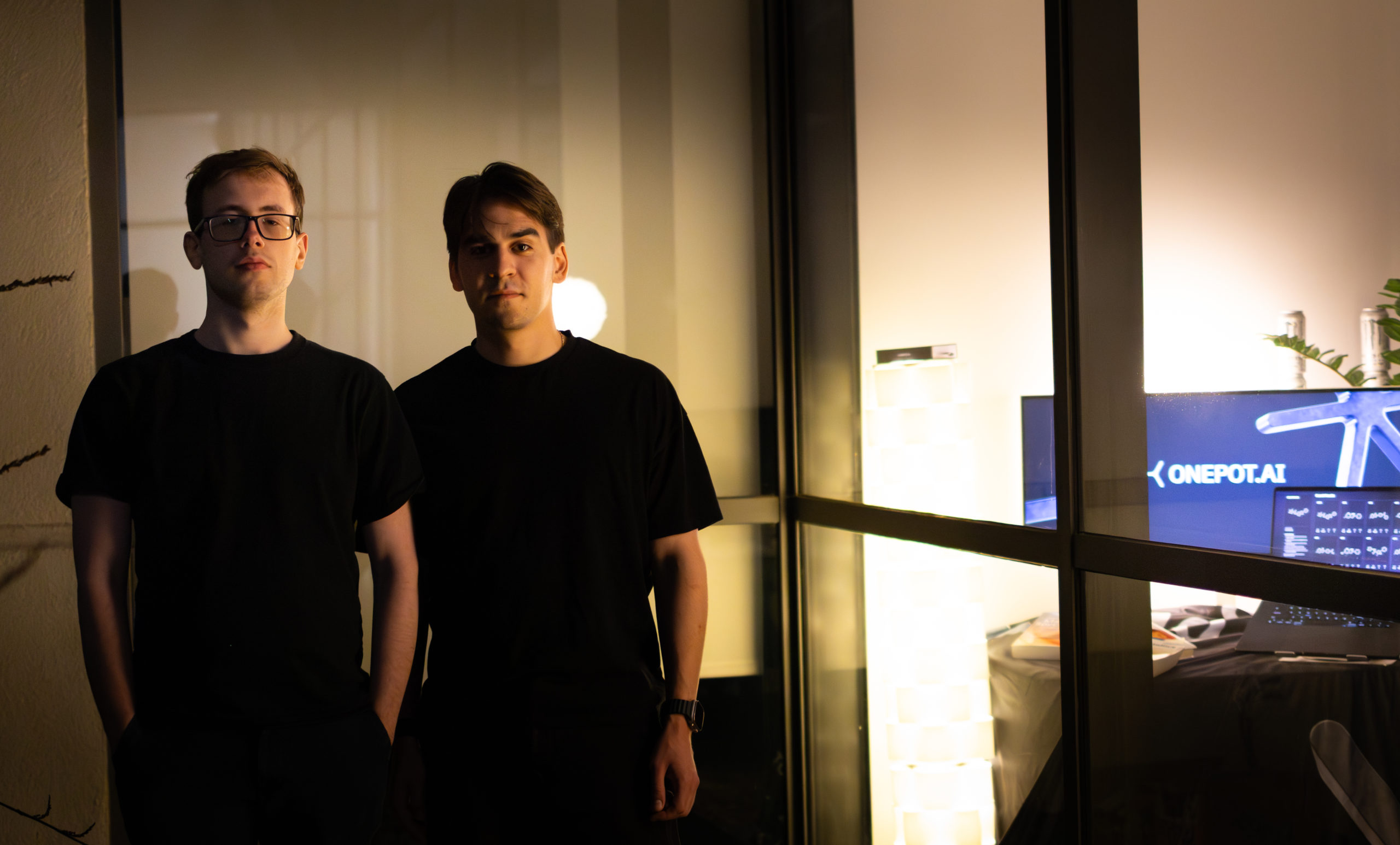
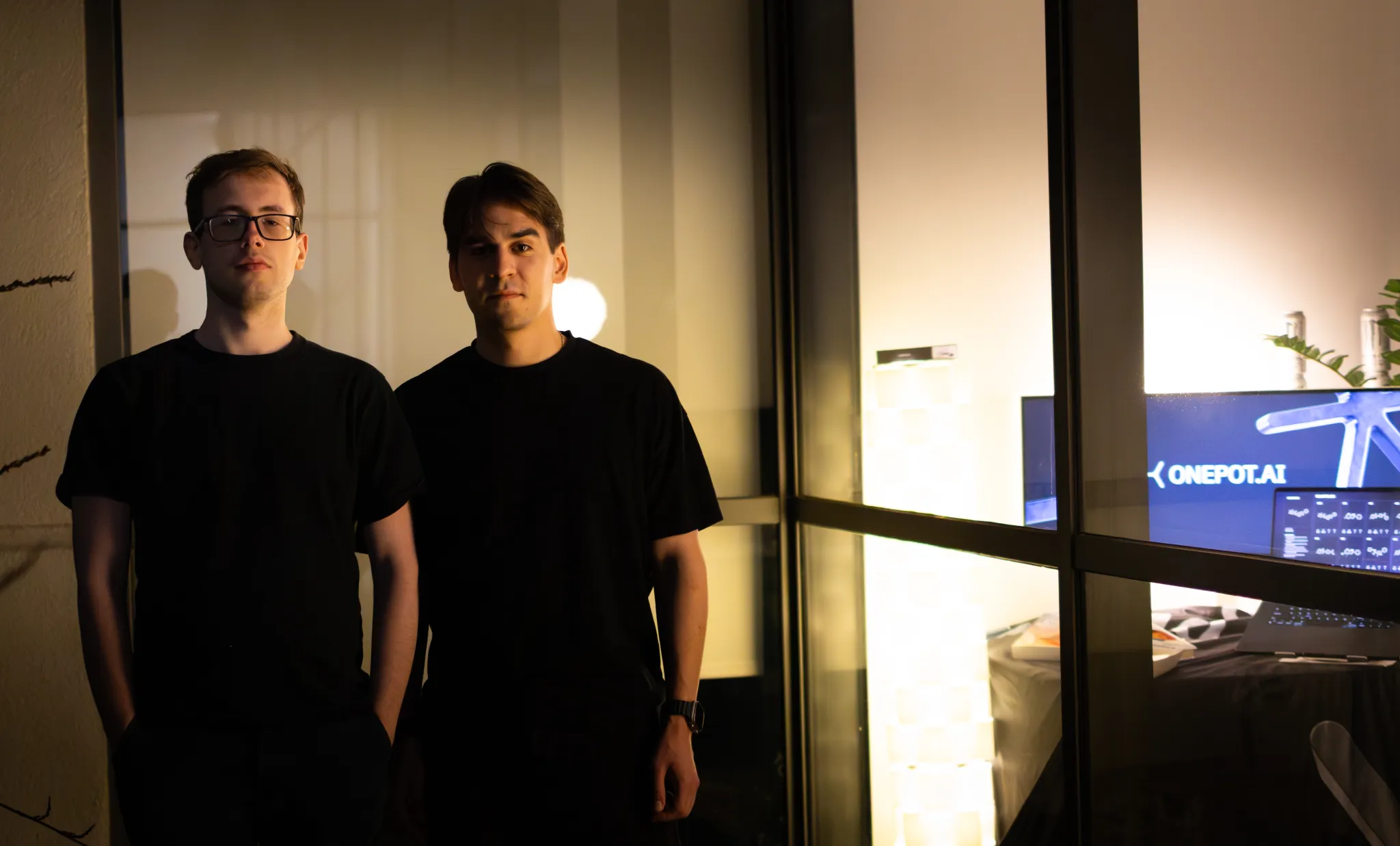
Founders Daniil Boiko and Andrei Tyrin built POT‑1 to capture every experimental detail-reagent identity, temperature, timing, and conditions-so Phil’s LLM agents learn from executed reactions rather than biased or incomplete literature. In their words, “no information is lost,” enabling reproducibility and iterative improvement. Early partners (undisclosed) are already trialing the service, and a second lab in San Francisco is planned to expand capacity.
The business model is straightforward: a catalog of make‑ready molecules plus on‑demand custom synthesis, shipped as vials or plates for customers’ assays. The founders argue this shrinks human‑driven trial‑and‑error that can take months and cost thousands per compound. Investors include Fifty Years (lead), Khosla Ventures, Speedinvest, and notable AI figures like Wojciech Zaremba and Jeff Dean—signaling conviction in the AI‑automation thesis.
Industry Context and Competitive Angle
Most biotechs either staff internal chemists or rely on overseas CROs. Lead times of several weeks to months are common for difficult syntheses, and geopolitical risk has made cross‑border logistics more fragile. Enamine offers vast enumerated libraries but on‑demand synthesis still queues; WuXi AppTec provides scale but often at longer timelines and distance. Onepot’s differentiation is a closed‑loop, AI‑driven, domestic lab focused on small molecules.
Compared to general‑purpose robotic labs, Onepot is vertically focused on synthesis with an AI planning layer trained on its own ground‑truth data. That distinction matters: literature‑trained retrosynthesis often fails in edge cases; lab‑native data can improve success rates. The open question is whether Onepot’s realized throughput, success rate, and price can beat established CRO economics at scale.
Operator’s Perspective: What This Changes
If the “days not months” claim holds, medicinal chemistry teams can run more aggressive SAR cycles, test unconventional scaffolds, and deprioritize “synthesizability” as an early filter. That could expand the accessible design space and surface non‑obvious hits. It also gives program leaders a way to hedge against international supply disruptions by diversifying to domestic capacity.
Expect this to play best in early discovery and hit-to-lead, where milligram‑scale material and rapid iteration matter most. It’s unlikely to replace scale‑up or GMP pathways soon; think of Onepot as a speed layer ahead of your existing CRO network, not a wholesale replacement. Integration with ELNs and analytics pipelines will determine how quickly teams can incorporate shipped compounds into assays without workflow friction.
Risks and Open Questions
- Throughput and SLA: How many unique compounds per week at what complexity tiers? Concrete SLAs for delivery times and rush jobs are essential.
- Quality and analytics: Standard QC package (LC‑MS, NMR, purity %) and rework policies for off‑spec material.
- Success rate and yields: Empirical data on first‑pass success vs. iterations; yield distributions by reaction class.
- Pricing and unit economics: Per‑compound or per‑mg pricing, volume discounts, and comparison to CRO quotes.
- Data governance: Who owns experimental traces generated while making your compounds? Are they used to train Phil? Can you opt out?
- Safety and compliance: Dual‑use safeguards for synthesis planning; export/shipping controls; restricted precursor handling.
- Scalability: How quickly can a second lab come online with comparable reliability? Any single‑site capacity bottlenecks?
- Lock‑in risk: Proprietary formats vs. standard ELN/SD file outputs; ease of switching vendors without data loss.
Recommendations
- Run a controlled pilot: 50-100 analogs across 3-4 reaction classes. Benchmark against your incumbent CRO on turnaround, QC pass rate, and total cost per usable compound.
- Set explicit SLAs and QC gates: Require LC‑MS/NMR reports, purity thresholds, and re‑synthesis terms. Track cycle time from order to assay‑ready material.
- Lock down data rights: Contract for ownership of all experiment traces tied to your projects, with clear options to exclude your data from model training.
- Integrate workflows: Connect ordering to your ELN, define plate maps upfront, and ensure assay teams can receive and process samples within 24 hours of delivery.
- Plan scale‑up continuity: For compounds that graduate, map a path to your existing CRO for gram‑scale and GMP without re‑inventing routes.
- Review safety controls: Ask for dual‑use risk mitigation policies, model access restrictions, and compliance documentation for hazardous shipments and export control.
Bottom line: Onepot’s AI‑lab approach addresses a real bottleneck. If they can prove reliable days‑scale synthesis with strong QC and transparent economics, they’ll earn a place alongside—not instead of—your CRO stack. Push for data, run a rigorous head‑to‑head, and let the metrics decide.
Leave a Reply