Executive Summary
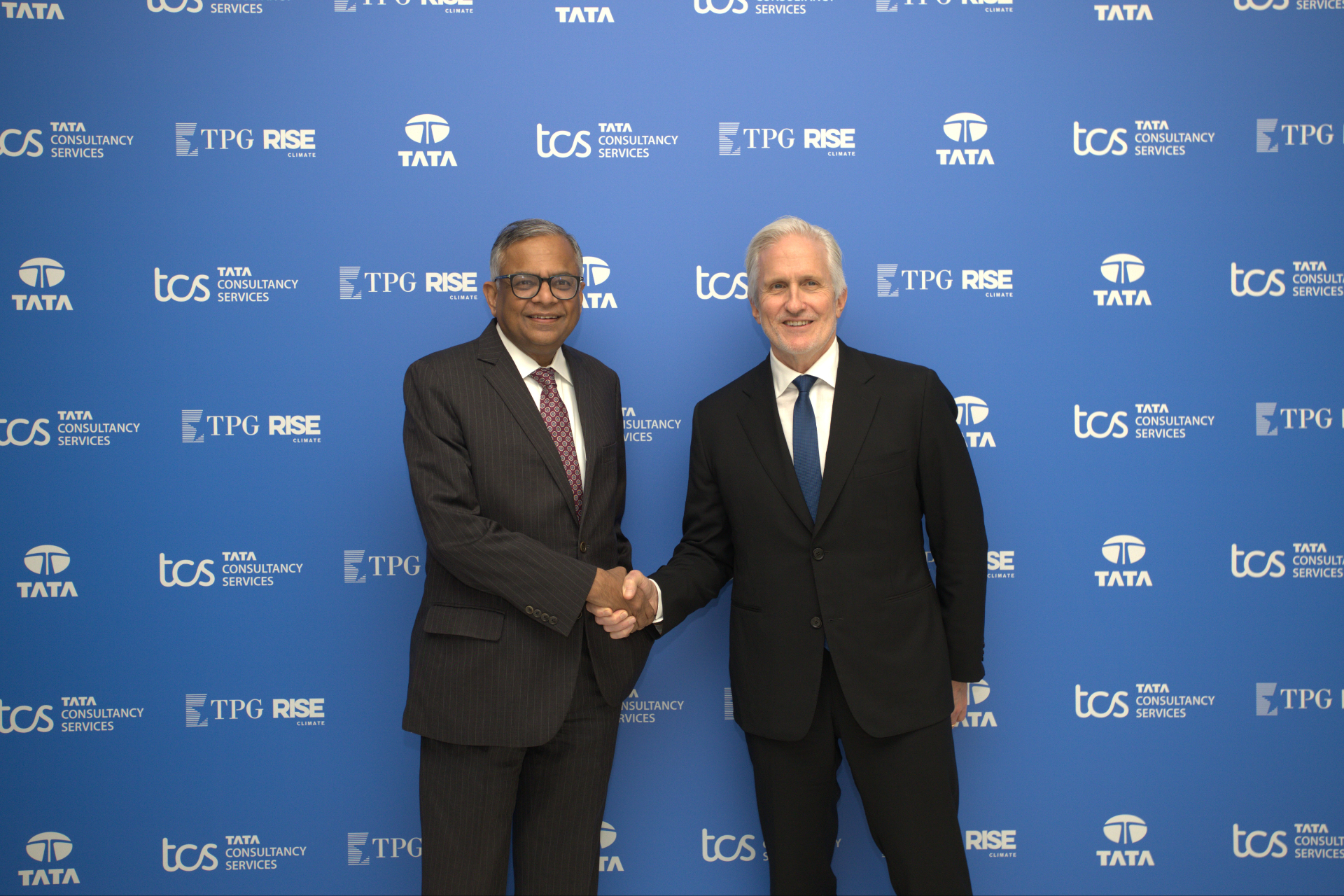
TCS secured $1 billion from TPG for HyperVault, a multi‑year, $2 billion buildout of liquid‑cooled, high‑density data centers in India, targeting roughly 1.2 GW in the initial phase. The goal is clear: create AI‑ready capacity for training and inference in a market that generates ~20% of the world’s data but owns only ~3% of data‑center capacity. This could materially ease AI compute constraints for India‑based workloads-if TCS can navigate water, power, and land bottlenecks in Mumbai, Bengaluru, Chennai and beyond.
Key Takeaways
- Scale and intent: HyperVault’s ~1.2 GW first phase positions TCS as a top‑tier AI colocation provider, not just a services vendor.
- Market timing: India data centers could exceed 10 GW by 2030 (from ~1.5 GW today), with >95% of new capacity leased, per S&P Global-favoring colocation buyers.
- Cooling trade‑offs: Liquid cooling enables 100-300 kW racks for GPUs but can be water‑intensive unless designed as closed‑loop or waterless systems.
- Resource risk: Power availability, industrial land, and water stress in urban hubs are likely gating factors for delivery timelines and operating costs.
- Competitive context: Matches hyperscaler and local investments (Microsoft $3B, Google $15B, AWS $12.7B) while providing a neutral, service‑led alternative.
Breaking Down the Announcement
HyperVault targets gigawatt‑scale, liquid‑cooled, high‑density facilities designed for AI clusters. Expect direct‑to‑chip liquid cooling and higher rack power densities to accommodate GPU servers that draw several kilowatts each. The upside: smaller footprints, lower latency for India users, and the ability to host training and large‑scale inference that typical air‑cooled halls can’t support.
The engineering trade‑off is resource intensity. Uptime Institute estimates a 1 MW data‑center load can require up to 25.5 million liters of water per year when using evaporative cooling. Applied naively, a 1.2 GW footprint could imply on the order of tens of billions of liters annually. That’s unacceptable in already water‑stressed metros. The counter: closed‑loop liquid cooling with dry coolers or seawater/brackish reuse can drive water consumption toward near‑zero, at the cost of higher energy overhead. TCS’s cooling design choices will determine the project’s social license and operating margin.
Industry Context
India’s demand-supply gap for AI compute is widening. S&P Global tracks over $32 billion in announced data‑center investment in the past two years, including Microsoft’s $3B for cloud/AI, Google’s $15B for a gigawatt‑scale hub in Andhra Pradesh, and AWS’s $12.7B through 2030. Local players-Reliance Industries and CtrlS among them—are expanding as well. Still, capacity lags data generation and AI adoption. The dominance of leased models (>95% of new capacity) signals enterprises prefer speed and flexibility over owning.
TCS adds something different: a services integrator delivering AI‑ready infrastructure. If it pre‑leases to hyperscalers and large enterprises, expects take‑or‑pay contracts and tailored halls for 100 kW+ racks. Given typical power usage effectiveness (PUE) of 1.2-1.3 in high‑efficiency builds, every 1 MW of IT load implies 1.2–1.3 MW of total facility power—making grid interconnects and renewable procurement central to the business case.
What This Changes for Operators
- Latency and data gravity: Training and inference can sit closer to India data sets, improving latency for fintech, telecom, and e‑commerce use cases.
- Capacity optionality: A neutral alternative to hyperscaler‑owned facilities may improve pricing and bargaining power for 100–300 kW rack needs.
- Sustainability posture: Buyers can push for water‑sparing designs and verifiable renewable energy—critical for ESG reporting and local approvals.
- Roadmap realism: Even with funding, delivery depends on grid upgrades, land assembly, and cooling choices. Plan for staged capacity 2025–2027+ instead of near‑term relief.
Risks and Constraints
- Water stress: In Mumbai, Bengaluru, and Chennai, municipal water is constrained. Require disclosed Water Usage Effectiveness (WUE) targets and non‑potable sources.
- Power availability: High‑density AI halls need firm, high‑voltage connections and redundancy. Curtailment, diesel limits, and monsoon‑season reliability are real risks.
- Land and permitting: Large, contiguous parcels near fiber and grid are scarce in Tier‑1 metros; expect movement to coastal or Tier‑2 regions and longer entitlement cycles.
- GPU supply and timelines: Facility readiness doesn’t equal GPU availability; procurement cycles for advanced accelerators remain tight.
- Regulatory direction: India’s data rules (e.g., DPDP Act 2023) are evolving. Sectoral requirements (BFSI, telecom) can drive localization and residency constraints.
Competitive Angle
Hyperscalers building their own AI campuses will coexist with colocation expansions from players like NTT, Equinix, AdaniConneX, and CtrlS. TCS’s differentiator is integration: designing, deploying, and operating AI infrastructure with service overlays (MLOps, security, managed training/inference). For enterprises seeking India‑resident AI capacity without full vendor lock‑in, HyperVault could be a viable complement to cloud regions—assuming TCS delivers water‑efficient cooling and firm power at scale.
Recommendations
- Start pre‑leasing now: Issue RFPs for 2026–2027 deliveries, specifying direct‑to‑chip liquid cooling, 100–300 kW racks, and interconnect to your cloud regions.
- Mandate sustainability KPIs: Require published PUE and WUE targets, non‑potable or closed‑loop cooling, and a 24/7 renewable energy roadmap beyond generic RECs.
- Diversify siting: Balance Tier‑1 metros with coastal or Tier‑2 sites near subsea landings and stronger grid capacity to reduce land and water risk.
- Harden compliance: Map workload placement to India data‑residency rules and sector‑specific guidance; build audit trails for model training data and inference logs.
- Contract for resilience: Negotiate penalties for power curtailment, water supply interruptions, and network SLAs; verify dual‑path fiber to major IXPs and cloud on‑ramps.
Bottom line: HyperVault is a credible swing at India’s AI compute shortfall. The value for buyers will hinge on engineering choices—especially water—and the ability to lock firm, renewable power. Move early to shape the design to your requirements, and assume phased, not instantaneous, relief to AI capacity constraints.
Leave a Reply