Executive summary – what changed and why it matters
Through the final months of 2025 the U.S. AI funding market has matched 2024’s tally of 49 startups raising $100 million or more, but with a meaningful shift: more repeat mega‑round raisers and heavier concentration in research labs, healthcare AI, and infrastructure. That shift signals sustained investor appetite and an accelerating consolidation of market power among deep‑tech players – with direct implications for procurement, vendor risk, and regulatory scrutiny.
Key takeaways
- Scale maintained: 2025 matched last year’s 49 $100M+ rounds, including several $1B+ financings (Anysphere, OpenAI, Thinking Machines, Cerebras).
- Concentration rising: funds are clustering into labs and infra vendors (Cerebras $1.1B; Groq $750M; Lambda $480M; Cerebras and others), increasing vendor lock‑in risk.
- Sector focus: healthcare AI and enterprise search/agents captured outsized capital – expect faster product maturation but higher regulatory exposure.
- Investor behavior: repeated mega‑rounds (multiple rounds per company in 2025) show appetite for scale over capital discipline — potential valuation and integration risks.
Breaking down the funding picture
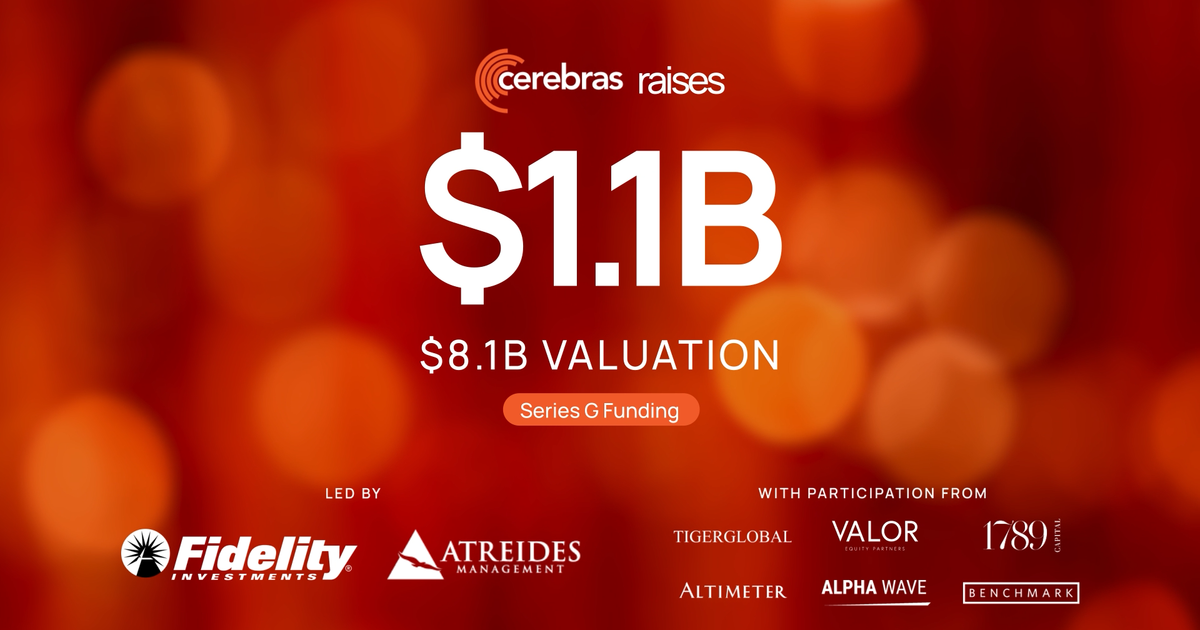
This year’s rounds span a wide range of stages and caps. Notable examples from the year include Anysphere’s $2.3B round (second round this year, ~$29.3B valuation), Cerebras’ $1.1B Series G (~$8.1B valuation), Thinking Machines’ $2B seed (~$12B valuation), OpenAI’s record $40B, and Groq’s $750M Series E (nearly $6.9B valuation). Equally significant are capital infusions for healthcare AI (Hippocratic AI $126M, OpenEvidence multiple rounds totaling >$400M, Abridge rounds), AI infrastructure (Lambda $480M, Celestial $250M, Nexthop $110M), and developer tooling/platforms (Fireworks AI $250M, Runway $308M).
Investors are not merely backing many startups; they’re doubling down on specific winners. Several firms raised multiple $100M+ rounds in 2025—a pattern that concentrates resources and influence in fewer companies with broader roadmaps, from model development to deployment hardware.

Why now — drivers behind the surge
Three forces converge: (1) persistent dry powder in late‑stage and crossover funds seeking high‑growth opportunities; (2) escalating compute and data needs that favor vertically integrated labs and specialty hardware providers; (3) enterprise demand for domain‑specific AI (healthcare, legal, defense) that can show near‑term monetization. Together they create a feedback loop: more capital → larger models and specialized infrastructure → more capital.
Risks and governance considerations
Concentration increases systemic and procurement risks. For buyers: vendor lock‑in, single‑vendor outages, and pricing leverage rise as a few players control critical components (models, chips, datasets). For regulators: large health‑focused rounds (Abridge, Hippocratic AI, OpenEvidence) raise questions about clinical validation, data privacy, and liability. For investors and boards: repeating mega‑rounds can inflate valuations and compress exit pathways, especially if macro capital conditions shift.
Competitive angle — what this means versus alternatives
This year accelerates a two‑track market: a capital‑intensive oligopoly of labs/hardware vendors and a broad tail of smaller, specialized providers. Open‑source stacks and smaller SaaS players remain competitive on cost and flexibility, but their growth will be constrained if large labs control critical primitives (pretrained models, fine‑tuning infra, chip supply).

Recommendations — concrete next steps for executives
- Procurement: Reassess vendor concentration. Add contractual SLAs and exit clauses when relying on single‑source labs or hardware providers.
- Partnership strategy: Prioritize partnerships with infrastructure providers that offer multi‑cloud or hardware‑agnostic deployment to hedge supply risk.
- Regulatory readiness: Healthcare and regulated industries should invest in third‑party validation and documentation to preempt compliance scrutiny.
- Talent and cost control: Expect talent competition and wage inflation. Plan for higher recurring costs for inference and retraining with large, proprietary models.
The 2025 fundraising pattern shows investors pushing deep pockets into a narrower set of platform plays. For buyers and product leaders, the immediate task is practical: manage concentration risk, insist on portability, and treat vendor economics and regulatory exposure as first‑order procurement criteria.
Leave a Reply