What Changed-and Why It Matters Now
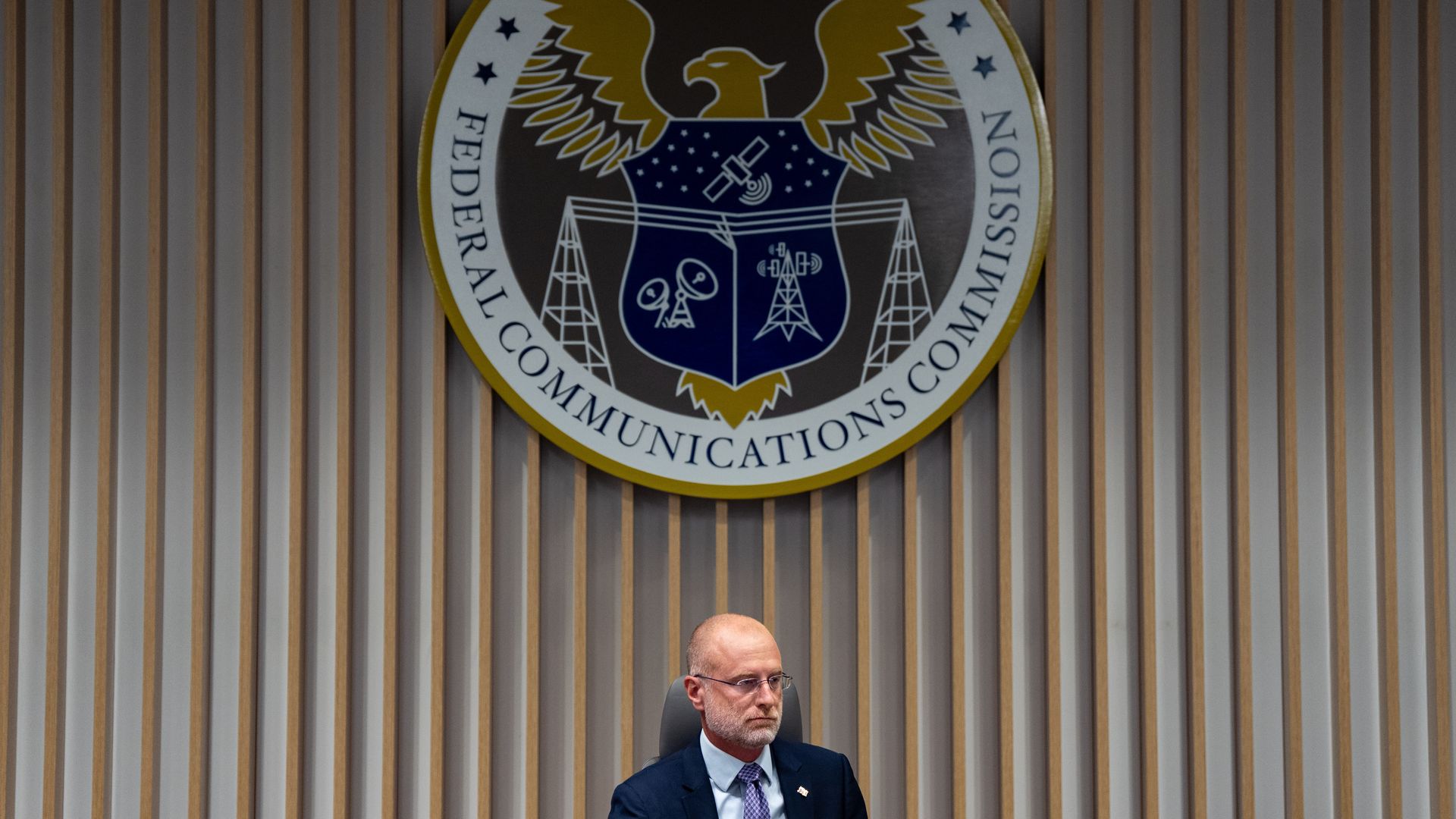
The FCC voted 2-1 along party lines to repeal minimum cybersecurity requirements for U.S. phone and internet carriers. The rollback removes enforceable controls like multifactor authentication on admin systems, asset inventory, least-privilege access, and independent testing-despite recent reporting that the China‑linked “Salt Typhoon” campaign infiltrated more than 200 telecom providers by abusing weaknesses in lawful‑intercept systems. For operators and buyers, this shifts risk back to voluntary practices and contracts, creating uneven security baselines across the nation’s communications backbone.
Key Takeaways
- Security baseline removed: Carriers no longer face FCC‑mandated minimum controls against unlawful access or interception.
- Higher exposure at the weakest links: Smaller/regional providers are now likelier to diverge on controls, widening attacker opportunity.
- Lawful‑intercept risk: Repeal heightens the chance that CALEA systems are subverted, undermining both privacy and law‑enforcement operations.
- Compliance shifts to contracts: Expect procurement, SLAs, and cyber insurance to become the primary enforcement mechanisms.
- AI detection gets harder: Inconsistent controls degrade data quality and increase false negatives in anomaly‑detection pipelines.
Breaking Down the Announcement
According to public reports, the Republican majority argued the prior rules were overly prescriptive and that voluntary collaboration is sufficient. The Democratic commissioner dissented, warning that the repeal removes the only enforceable baseline for critical infrastructure. Other FCC initiatives-like supply‑chain restrictions on high‑risk vendors—remain, but these do not set day‑to‑day hardening requirements or operational safeguards in live networks.
The timing is notable: the Salt Typhoon campaign reportedly targeted lawful‑intercept and core network systems over multiple years, compromising carriers at scale. The now‑repealed framework, adopted in early 2025, sought to align carrier practices with modern security standards—risk assessments, MFA, inventory, and independent validation—precisely where adversaries were proven successful. Repeal effectively reverts those obligations to “best effort.”
Operational Impact for Telecom and AI Security Teams
Without an FCC baseline, carriers will set their own thresholds. Large nationals will likely keep robust programs; many smaller providers will face budget and talent constraints. That asymmetry creates systemic risk because adversaries pivot through the least‑defended networks, then target interconnects, lawful‑intercept mediation devices, and signaling (SS7/Diameter/SIP) paths.
Three practical effects follow. First, control drift: MFA, privileged‑access workflows, and independent red‑teaming may be postponed or scoped narrowly. Second, visibility gaps: incomplete asset inventories and uneven log coverage (e.g., lawful‑intercept platforms, 5G core SBA interfaces) reduce detection fidelity. Third, responder latency: organizations without regular validation and exercises respond slower under real pressure.
For AI‑driven defenses, heterogeneous baselines complicate data normalization, model training, and alert calibration. Anomaly detection tuned to environments with strong access controls and complete telemetry underperforms when inputs vary. Expect higher false positives from noisy logs and higher false negatives where critical sources (e.g., HLR/HSS, IMS, mediation devices) are missing. Teams should prioritize feature engineering that is resilient to partial data and adopt adaptive thresholds informed by carrier‑specific context.

Industry Context and Competitive Angle
Internationally, the trajectory is opposite. The EU’s NIS2 and the UK’s telecom security regime impose mandatory controls and audits on operators. U.S. carriers now operate in a looser federal landscape, with enforcement pressure shifting to state oversight, insurance underwriting, and enterprise buyers. Practically, that means RFPs and interconnect agreements will become de facto security regulators.
Relative to alternatives, the repealed FCC rules were not cutting‑edge; they codified a minimal, sensible baseline. Rolling them back reduces near‑term compliance overhead, but increases tail risk: more incidents, higher forensics and outage costs, insurance exclusions, and tougher renewal terms. For law enforcement, the move may be counterproductive—exposed intercept systems enable espionage while eroding evidentiary integrity.

What This Changes for Buyers and Partners
Enterprises that depend on carrier connectivity (virtually everyone) should not assume consistent protections across providers and regions. Contractual controls must substitute for regulation: require MFA on administrative systems, continuous asset discovery, segmentation, independent testing, and prompt disclosure of lawful‑intercept system compromises. Include right‑to‑audit clauses and artifacts (red‑team reports, control attestations) tied to service credits or termination rights.
Recommendations
- Maintain the baseline anyway: Implement NIST CSF‑aligned risk assessments, enforced MFA, privileged‑access management, continuous asset inventory, and quarterly independent testing—regardless of mandates.
- Harden telecom‑specific attack surfaces: Deploy SS7/Diameter firewalls, lock down SIP trunks, enforce mutual TLS and certificate hygiene across 5G service‑based interfaces, and restrict access to lawful‑intercept mediation systems with just‑in‑time credentials.
- Strengthen AI detection under heterogeneity: Normalize telemetry across signaling, core, and intercept systems; train models on diverse carrier profiles; and use adaptive thresholds with human‑in‑the‑loop triage.
- Use contracts to enforce controls: Bake security requirements and evidence delivery into MSAs, interconnect agreements, and partner SLAs; link non‑compliance to fees or exit options.
- Budget with realistic timelines: As order‑of‑magnitude guidance, plan 2-4 weeks for risk assessments ($50k-$150k), 1–3 months for MFA rollout ($20k–$100k), one month to stand up continuous asset discovery ($30k–$120k), and 3–6 months for AI anomaly detection ($100k–$500k+), varying by scale and tooling.
What to Watch Next
Monitor whether major carriers publicly commit to keep the repealed controls; whether insurers tighten underwriting; whether state regulators or Congress seek substitute guardrails; and whether incident frequency or dwell time changes over the next two quarters. If we see renewed targeting of lawful‑intercept infrastructure, expect customers to push harder through contracts and for legislators to revisit minimum standards.
Leave a Reply