Business Impact: Why Boards Can No Longer Ignore Solar Geoengineering
When American-Israeli startup Stardust closed a $60 million Series A round in February 2024—reportedly the largest venture infusion in solar geoengineering to date (Heatmap, Feb 2024)—it signaled more than a funding milestone. It marked the entry of high-stakes “planet hacking” into mainstream portfolios. For executives, this rapid private acceleration against a backdrop of regulatory uncertainty creates material risks: unpredictable compliance costs, potential litigation, and brand erosion among customers and investors.
Stardust at a Glance: Timing, Technology, and Ambitions
- Founding & Funding: Co-founded in late 2022 by climate engineer Dr. Yael Cohen and atmospheric scientist Dr. Daniel Hirsch, Stardust closed a $60 million Series A led by GreenFront Ventures in Feb 2024.
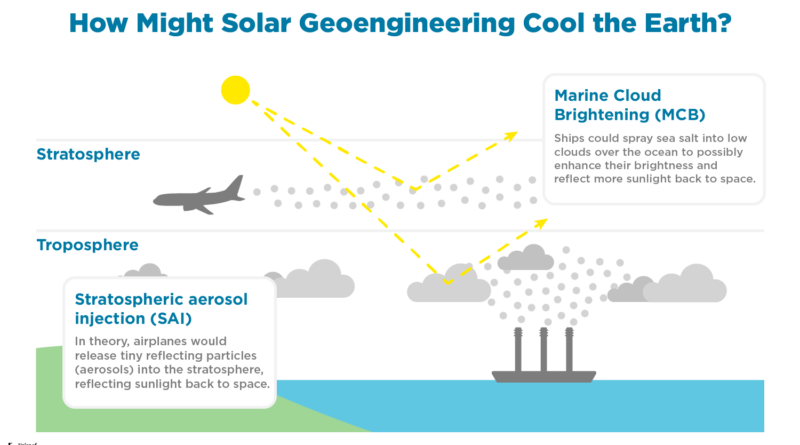
- Technology & Timeline: Plans to deploy stratospheric aerosol injection (SAI) prototypes by 2028, scaling to commercial operations by 2030. Core tech includes high-altitude balloon arrays, satellite radiometry validation (Sentinel-5P, MODIS), and proprietary aerosol dispersal modeling.
- Strategic Pitch: Positioning SAI as a rapid-response climate “stopgap,” with marketing claims of cooling 0.5 °C within five years. Veteran researchers David Keith (UChicago) and Daniele Visioni (Cornell) warn these projections may be “overstated” and could erode public trust (MIT Technology Review, Apr 2024).
Executive Summary: Strategic Imperatives
- Regulatory Overhang Intensifies: From Mexico’s June 2023 restriction on unauthorized aerosol tests in the Yucatán (Nature, July 2023) to the UN Environment Assembly (UNEA) resolution in Dec 2023 and the EU Parliament’s October 2023 oversight calls, national and international bodies are drafting moratoria and permit regimes. Expect unpredictable timelines and costs from NOAA/NSF/USGCRP policy frameworks in the US.
- Reputational & ESG Risk: Terms like “planet hacking” can trigger consumer boycotts and activist campaigns. In Q1 2024, a leading European insurer (Lloyd’s) excluded “geoengineering liability” under D&O policies, adding a £10 million premium surcharge for related exposures.
- Liability & Insurability: Cross-border impacts raise novel tort claims, international arbitration risk, and product liability questions. Contractual clauses—such as “no-geoengineering exposure” force majeur language—are emerging in supplier and insurance agreements.
Market & Regulatory Context: A Governance Vacuum
Unlike carbon removal—with established MRV standards (ISO 14064-2) and investment tax credits—solar radiation modification (SRM) remains in a regulatory grey zone. The EU’s European Chemicals Agency (ECHA) is studying aerosol risks; Mexico’s National Institute of Ecology (INE) has drafted local bans; and US agencies (NOAA’s SCoPEx program and NSF grants) fund research without deployment mandates.

Tech & Policy Toolkit: From MRV to Assurance
To navigate this evolving landscape, businesses need robust monitoring, reporting, and verification (MRV) and sensing capabilities, including:
- Satellite Radiometry & Aerosol Sampling: Use Sentinel-5P and ground-based lidar networks to detect stratospheric sulfate layers.
- Attribution Models: Leverage NOAA’s Climate Attribution Model to link SRM experiments to regional weather anomalies.
- Third-Party Audits & Open Science: Align with UNEA guidelines and partner with accredited labs for transparent data publication.
Relatable Example: How One Insurer Bolstered Resilience
In early 2024, GlobalSure Insurance piloted a “Geoengineering Exclusion Endorsement,” saving an estimated $5 million in potential collateral damages by pre-emptively carving out SRM activities from portfolios. The firm also invested $1 million in policy-intelligence software to track UNEA, EU, USGCRP, and Mexico developments in real time—cutting legal review cycles by 40%.
Action Plan: Concrete Next Steps & Ownership
- Board-Level Review (30 Days): Add SRM to the enterprise risk register. Assign the Chief Risk Officer and Head of Sustainability as co-owners for quarterly updates.
- Independent Scientific Red-Teaming (60 Days): Engage a neutral lab (e.g., National Center for Atmospheric Research) for pre-investment due diligence. Require open-data publication clauses in all R&D partnerships.
- Policy Watch & Engagement (Ongoing): Legal team to track UNEA, EU Parliament, NOAA, and Mexican INE rulemakings. Participate in ISO/TC 207 standard-setting committees by Q3 2024.
- Insurance & Contract Review (90 Days): Examine existing D&O, E&O, and cyber-insurance policies for geoengineering exclusions. Negotiate “shared liability” clauses with suppliers and partners.
- Stakeholder Communications (45 Days): Develop FAQs and crisis playbooks. Schedule board-approved messaging guidelines to address media inquiries on SRM links.
- Strategic Investments: Allocate near-term capital to MRV, sensing, and policy analytics tools. Defer direct exposure to deployment until regulatory clarity emerges.
Conclusion & Call-to-Action
As solar geoengineering moves from theory to VC-funded reality, boardrooms must treat it as a critical strategic issue. Codolie’s Enterprise Risk Assessment can help you map exposures, prioritize governance measures, and engage stakeholders effectively. Contact our team to schedule a board-level workshop within the next 30 days and stay ahead of this high-impact climate tech frontier.

Sources: Heatmap reporting (Feb 2024); MIT Technology Review op-ed by David Keith & Daniele Visioni (Apr 2024); Nature reporting on Mexico (July 2023); UNEA Dec 2023 resolution; EU Parliament Oct 2023 report; NOAA/NSF research frameworks.
Leave a Reply