Executive summary – what changed and why it matters
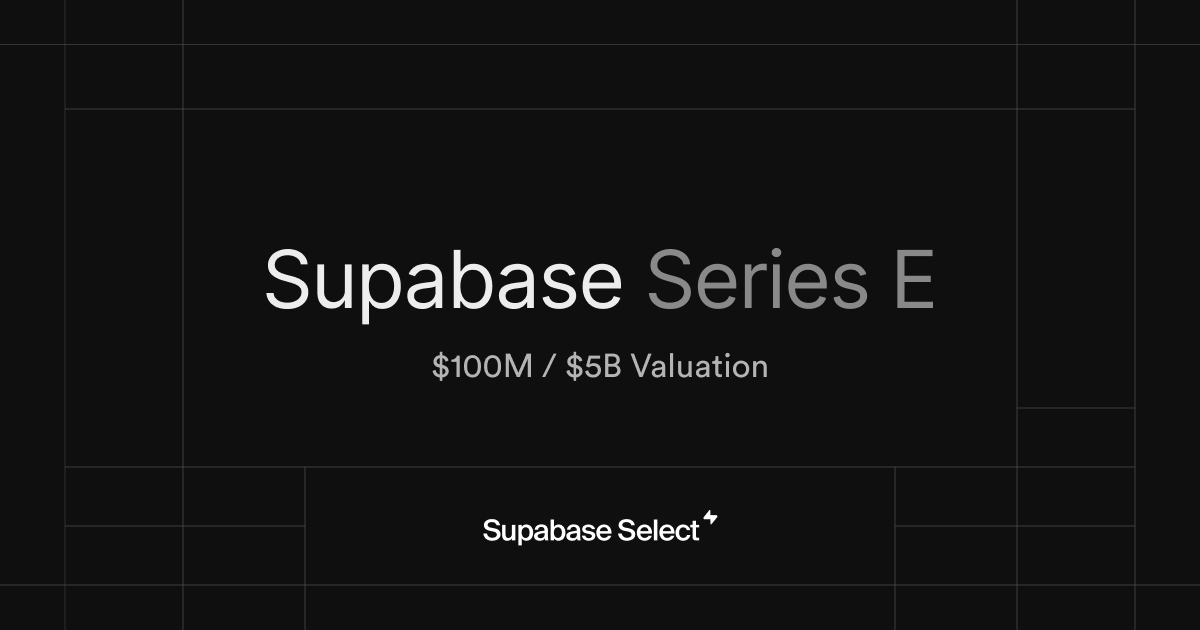
Supabase closed a $100M round at a $5 billion valuation shortly after a prior $200M raise, and CEO Paul Copplestone says the company is deliberately refusing large enterprise contracts to protect its product direction. That choice trades short‑term revenue for product integrity, developer trust, and long‑term scalability-important signals for AI infrastructure leaders deciding whether to chase enterprise custom work or double down on open, developer‑centric platforms.
- Impact: Supabase’s stance prioritizes open‑source, Postgres‑native tooling and vector features over bespoke enterprise integrations.
- Scale: The company has raised roughly $300-380M in disclosed capital this year, funding growth without enterprise dependency.
- Risk: Turning down high‑value contracts slows near‑term revenue and forces alternative monetization pathways to scale.
- Why now: AI applications need low‑latency vector search, JSONB support and developer velocity-traits Supabase claims to protect by avoiding enterprise detours.
Breaking down the strategy
Substantive change: Supabase is actively refusing custom enterprise deals that would demand bespoke integrations, compliance lift, and legacy support. The company says that reallocating engineering time to enterprise requests would erode the core product that drives broad developer adoption—its open, Postgres‑based backend with auto‑generated APIs, built‑in auth, and an integrated vector toolkit.
That’s a tactical decision with measurable tradeoffs. On one hand, staying focused supports low‑latency, high‑throughput data paths necessary for AI features (vector storage, embeddings, real‑time replication). On the other, it means Supabase must prove a repeatable commercial model that scales without selling many bespoke, high‑margin contracts.
Technical posture and why it’s relevant to AI stacks
Supabase’s architecture centers on Postgres and extensions (pgvector, JSONB, full‑text) that make it suitable for embedding storage, semantic search, and AI applications. Auto‑generated REST/GraphQL endpoints and built‑in auth shorten time‑to‑prototype—useful for “vibe‑coding” and rapid AI experimentation. The company’s Multigres and hires (notably leaders with distributed DB experience) indicate a roadmap toward enterprise scale while keeping a single open‑source core.

Where this fits in the market (competition and comparison)
Compared with Firebase and managed NoSQL alternatives, Supabase offers Postgres compatibility and richer SQL features for complex queries. Against dedicated vector solutions (Pinecone, Weaviate), Supabase’s integrated vector toolkit trades specialized performance at the extreme scale for tighter developer ergonomics and cost predictability. The risk profile differs: Firebase/managed NoSQL target fast app development with vendor lock‑in; vector DBs optimize retrieval latency for massive embedding datasets.
Risks and governance considerations
Key risks: slower revenue ramp, potential enterprise churn if customers demand custom features, and compliance gaps if large customers require on‑prem or FedRAMP levels of control. Operationally, refusing enterprise work requires rigid enterprise engagement rules to avoid ad hoc exceptions that erode the policy. Security and SLAs must be explicit for the customers you keep.
Recommendations for AI product and platform leaders
- Define non‑negotiables: Create a product vision board listing architecture constraints (open source core, API‑first, supported Postgres extensions). Use it to evaluate or reject enterprise deals.
- Audit technical debt: Before taking custom work, run a technical‑debt and security audit (SonarQube, OWASP ZAP) and cap bespoke work to a fixed percentage of engineering capacity.
- Fund alternative growth: Secure capital or community funding to buy time—Supabase’s large raises show investors will back product integrity if traction exists.
- Operationalize enterprise engagement: Publish minimum requirements (cloud‑native, API integration only, standard SLAs) and a fast‑track path for customers that meet them.
- Prepare scale tech: Invest in sharding/partitioning, Kubernetes orchestration, Prometheus/Grafana monitoring, and hires with distributed DB experience to close the capability gap without product drift.
Bottom line
Supabase’s decision to turn down million‑dollar contracts is a deliberate bet: protect developer momentum and the product core now to capture larger, more sustainable market share later. For AI infrastructure leaders, the lesson is clear—decide what you won’t build as deliberately as what you will. If you can fund the gap and set strict enterprise engagement rules, the same discipline can preserve product velocity and reduce technical debt as AI workloads scale.
Leave a Reply